
Why Hot-Dip Galvanizing Matters in Modern Construction

In construction, deterioration is inevitable – and for steel, corrosion is one of the most visible and costly forms. The real challenge is not unpredictability; it is the tendency to defer corrosion risk as a future maintenance issue. When that happens, the consequences don’t disappear; they compound into more disruptive and expensive corrective action such as traffic control, scaffolding, shutdowns, and significant repairs.
Corrosion can be anticipated, designed for, and managed upfront by selecting a protection system that matches the required service life and environment. Rather than planning for future repair campaigns, project teams can build long-term corrosion protection into the steel before it ever reaches the jobsite. Hot-dip galvanizing is a game-changer because it allows teams to design out a significant share of future maintenance, cost, and disruption from the start.
For teams considering hot-dip galvanizing, success depends on understanding how to achieve a high-quality coating, when a duplex system (HDG + paint) is warranted, and what level of performance to expect in service.
What is Hot-Dip Galvanizing?
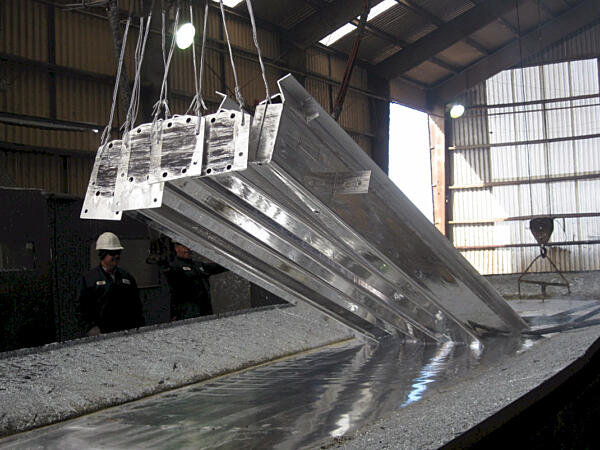
Hot-dip galvanizing is a corrosion protection process in which fabricated steel is immersed in molten zinc, forming a metallurgically bonded coating that provides both barrier and cathodic protection. Unlike barrier coatings, which sit on the surface, HDG creates intermetallic layers that become part of the steel itself, offering both barrier and cathodic protection. This means the zinc coating will sacrificially corrode to protect the underlying base steel. Further, HDG offers robust, uniform protection even in hard-to-reach areas delivering long-term durability and minimal maintenance across a wide range of applications.
How is Hot-Dip Galvanizing Protection Different than Paint?
As noted, hot-dip galvanizing is metallurgically-bonded to the steel, essentially becoming a part of the steel offering both barrier and cathodic protection.1 Because the coating grows perpendicular to the steel surface, it delivers complete, uniform coverage on edges, corners, and complex geometries. As the coating weathers, it develops a stable zinc patina that further slows corrosion and strengthens long-term performance.
Paint, by contrast, is primarily a barrier system, and its performance depends on that barrier remaining intact over time especially at edges, corners, welds, and other vulnerable areas where continuity and adhesion are harder to maintain. 2
Once exposed to the environment, paint systems can get scratched, crack, or delaminate allowing corrosion to begin and extend laterally under the coating, known as underfilm corrosion. On the other hand, hot-dip galvanized coatings are much more difficult to damage initially; and when damage occurs, the surrounding zinc helps confine corrosion to the affected area rather than allowing it to spread across the steel.
This difference not only extends the time to first maintenance but also simplifies maintenance when it is needed by limiting repairs to small, isolated areas. The key difference is that HDG becomes part of the steel and continues to protect small damaged areas, while paint remains a surface-applied barrier.
Hot-Dip Galvanizing (HDG) |
Attribute |
Liquid Coatings (Paint) |
Barrier protection, sacrificial protection, zinc patina |
Protection mechanism |
Barrier protection only |
Metallurgically bonded to the steel |
Bond to steel |
Mechanically adheres to the surface as a film |
Continues protecting at small scratches or exposed areas via cathodic protection |
Performance at damage |
Damage can expose steel and allow corrosion to begin |
Immersion coats edges, corners, interiors, and hard-to-reach areas |
Coverage on complex geometry |
Coverage depends on access, line of sight, and application quality |
Zinc gradually consumes over time to protect steel |
Typical failure behavior |
Can crack, chip, or allow underfilm corrosion to spread |
Longer time to first maintenance when matched to the environment |
Maintenance pattern |
More dependent on periodic touch-up and repainting |
More durable during handling, transport, and service |
Field reliability |
More sensitive to surface prep, application, and coating continuity |
Projects prioritizing durability, reduced maintenance, and life-cycle performance |
Best fit |
Projects prioritizing color, finish, or aesthetic flexibility |
How Long Does Hot-Dip Galvanizing Last in the Real World?
Hot-dip galvanizing time to first maintenance depends on the coating thickness and environment. In atmospheric exposure, this life is highly predictable and there are a number of AGA tools that can facilitate this estimate:
- Time to First Maintenance Chart – conservative estimate based on macroenvironment and coating thickness
- Zinc Coating Life Predictor (ZCLP) – more detailed estimate based on macro and micro environment
Both of these tools rely on real world performance data. This is key as accelerated salt spray testing does not reliably predict real-world performance for metallic zinc coatings. Performance comparisons that base HDG performance on accelerated test data should be highly scrutinized.
Predicting the life of hot-dip galvanized steel in non-atmospheric exposure can be a little more difficult. However, the AGA provides a number of tools and guidance to assist project teams in setting durability expectations. Whether buried in soil, embedded in concrete, in contact with other metals, or submerged in water – the AGA shares guidance to make informed decisions.
How Do You Specify and Design Hot-Dip Galvanizing Successfully?
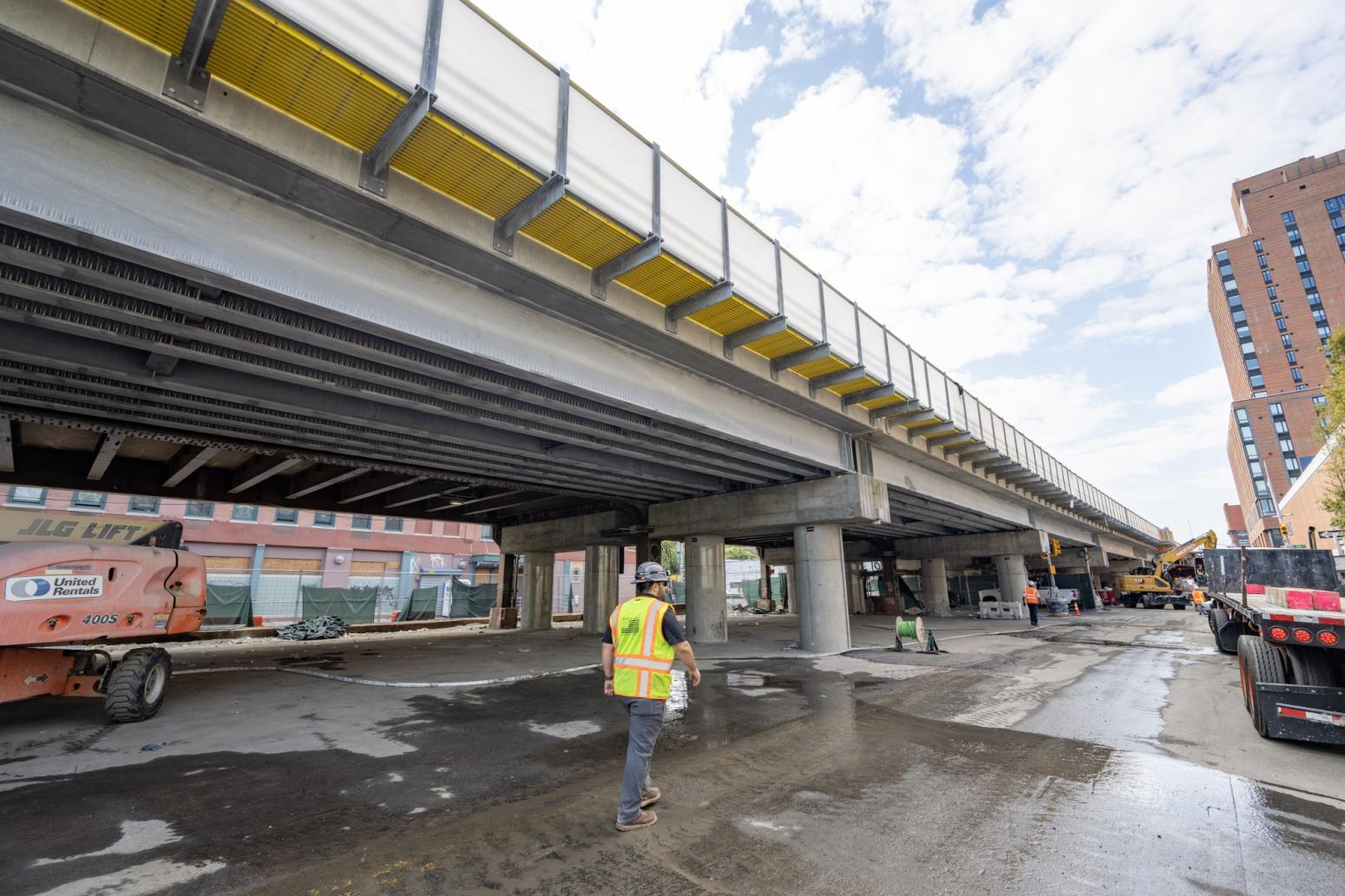
Successful hot-dip galvanizing starts with early design and specification decisions. Project teams need to classify the environment correctly, specify the applicable ASTM standard, and design and detail the steel so it can be galvanized safely and completely. Because hot-dip galvanizing requires full immersion in molten zinc, design decisions such as venting, drainage, fabrication practices, and material selection can directly affect coating quality.
Designing for galvanizing means designing for immersion. Zinc must be able to flow into, through, and out of the fabricated article freely, while also allowing air to escape. Teams should also account for how the heating and cooling cycle may affect certain shapes, connections, and welded assemblies. There are ASTM Specifications that provide material selection, best design practices, and other important details to ensure a high-quality galvanized coating.
Core ASTM Standards
In North America, the primary governing ASTM standards for batch hot-dip galvanizing are:
- ASTM A123/A123 M for structural steel, plate, bar, pipe, tubing, and fabricated assemblies
- ASTM A153/A153M for hardware, fasteners, castings, and other centrifuged or spun articles
- ASTM A767/A767 M for galvanized reinforcing steel
These standards define the main acceptance requirements for the galvanized coating, including thickness, finish, appearance, and adherence, while also addressing product-specific considerations.
Supporting ASTM Guidance
- ASTM A143/A143M for reducing and detecting embrittlement risk
- ASTM A384/A384M for minimizing warpage and distortion
- ASTM A385/A385M for steel selection, venting, drainage, and fabrication practices
- ASTM A780 or touch-up and repair of damaged galvanized coatings
- ASTM A1068 for life-cycle cost analysis of corrosion protection systems
- ASTM D6386 for preparing galvanized steel for paint
- ASTM D7803 for preparing galvanized steel for powder coating
The goal is not just to specify galvanizing, but to specify it in a way that supports a high-quality, practical, and durable result. When the steel is detailed for zinc flow, and the correct ASTM standards are named, project teams are far more likely to achieve the coating quality and long-term performance they expect.
The AGA provides a number of practical guides and resources based on these standards to assist specifiers with design, detailing, welding, duplex systems, inspection, and touch-up and repair.
When Should a Project Use a Duplex Coating System (HDG + Paint)?
Projects should consider a duplex system when they need the durability of galvanizing plus added color control, finish consistency, or extra protection in aggressive environments.
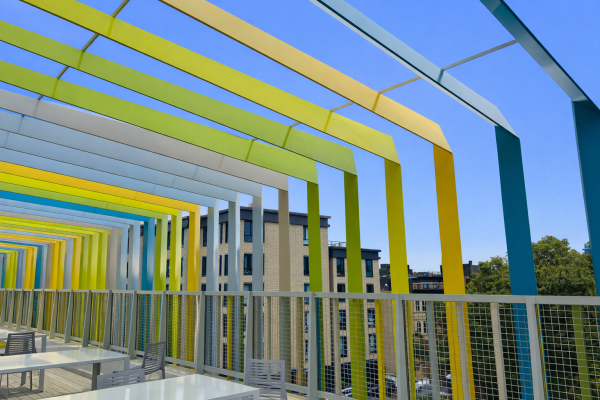
In many cases, duplex systems are selected primarily for appearance: the project team wants the durability of galvanized steel, but in a color other than gray. They also make sense in aggressive environments because duplex acts as a performance multiplier: the paint shields the zinc from weathering, and the zinc continues protecting the steel if the paint is damaged. This is known as the synergistic effect: duplex systems often provide 1.5 to 2.3 times the service life of either coating used alone.
In practical terms, applying paint or powder coating over galvanized steel can significantly extend maintenance intervals compared with paint on bare steel, reducing recoating frequency and lowering life-cycle cost.
For a duplex system to perform as intended, the designer, fabricator, galvanizer, and painter or powder coater need to coordinate early to discuss:
- Surface preparation: sweep blasting or other approved methods to clean and profile the surface for adhesion without unnecessarily removing or damaging the zinc coating 3
- Coating compatibility: verify that the selected primer and topcoat, or powder system, is appropriate for galvanized steel 4
- Responsibility for smoothing or touch-up: because ASTM and SSPC guidance does not always clearly assign these tasks, teams should define responsibility before work begins 5
What Pitfalls Can Affect Galvanized Steel Performance?
Most disappointing galvanized outcomes are not caused by zinc protection failing in principle. They usually trace back to avoidable issues in detailing, storage, handling, or service conditions that were not fully considered during design or construction.
Common pitfalls include trapped-moisture details, poor venting or drainage, wet storage stain from improper staging or storage, and contact with dissimilar metals. Performance can also be affected when teams assume an indoor location is automatically low-corrosion, even though condensation, leaks, wash-down, or persistent humidity may create a more aggressive microclimate than expected.
Appearance can also mislead teams. Early patina variation, white staining, or uneven weathering may look severe in photos, but visual change does not determine whether the coating is acceptable. Coating thickness measurements are the key to whether the coating is acceptable and performing as expected.
The practical lesson is straightforward: galvanized steel performs best when details shed water, storage keeps surfaces dry and ventilated, material interfaces are evaluated, and inspection focuses on measurable coating condition rather than appearance alone.
Where Does Hot-Dip Galvanizing Create the Most Value in Construction?
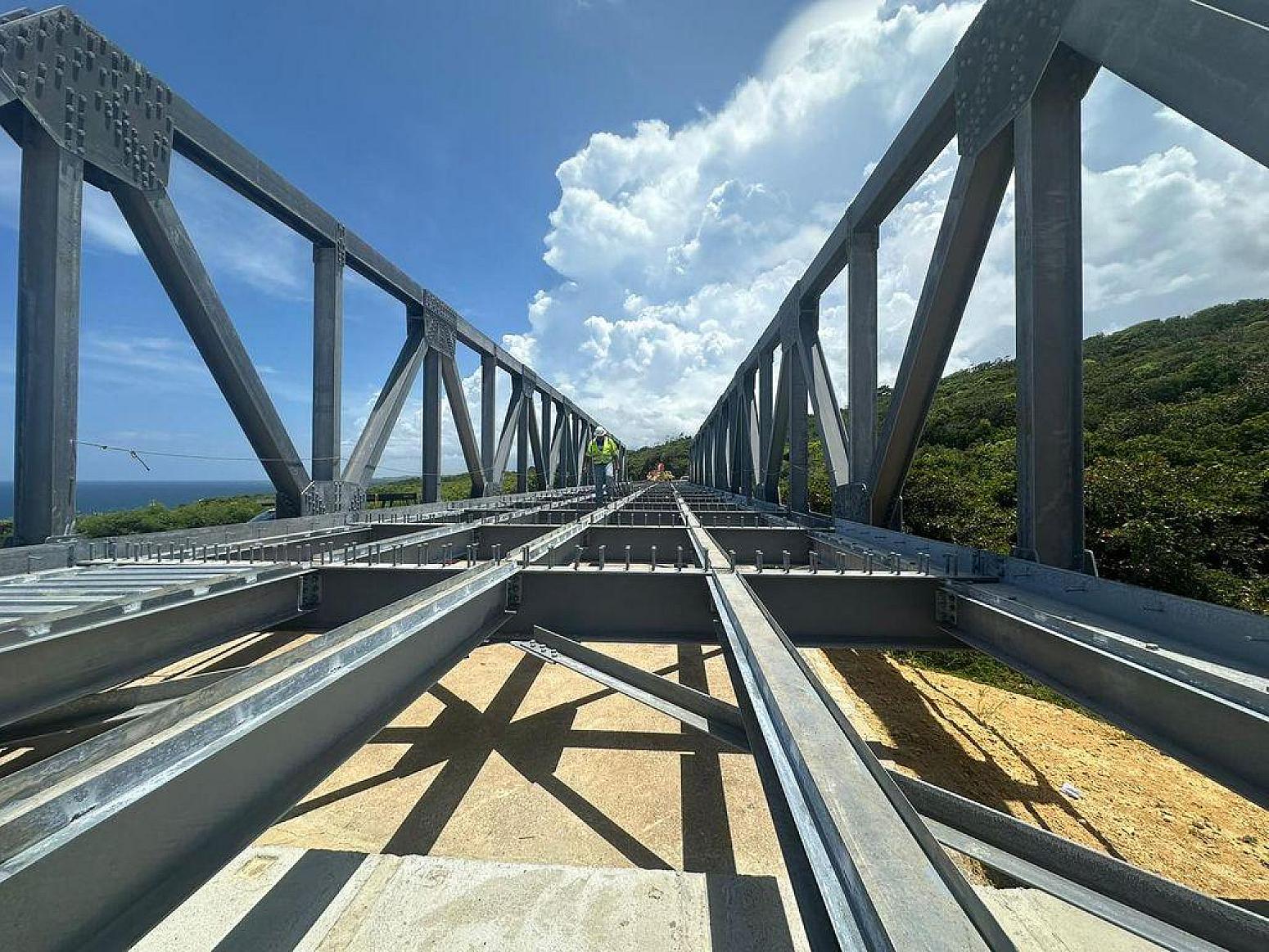
Hot-dip galvanizing creates the most value where future access is expensive, recoating would disrupt operations, or steel geometry makes paint coverage less reliable. It is especially effective on components owners expect to ignore for decades, because it moves corrosion protection into fabrication instead of leaving it as a future maintenance problem.
The common thread is the access premium. A coating choice that costs more upfront can still reduce total ownership costs if future maintenance would require lifts, traffic closures, rope access, shutdowns, night work, or difficult inspection conditions. In those cases, HDG reduces both maintenance frequency and the operational uncertainty that comes with repeated field coating campaigns.
Common High-Value Applications
- Bridges and ancillary steel such as handrails, barriers, brackets, lighting supports, and maintenance walkways
- Poles and mast structures for lighting, signage, and communications equipment where climbing access drives maintenance cost
- External stairs, ladders, and platforms where abrasion, edge exposure, and weather quickly challenge paint systems
- Rails and balustrades that are high-touch, damage-prone, and visually scrutinized when corrosion appears
- Secondary supports and brackets including pipe supports, cable tray supports, and equipment frames in exposed areas
- Embeds and interface steel near soil, concrete, or other locations where access largely disappears after installation
Often Overlooked Locations
Teams should also pay close attention to indoor or hidden steel. Many premature corrosion problems begin in areas assumed to be mild, then become more aggressive because of condensation, wash-down, leaks, or trapped moisture. Common examples include steel under canopies, parking structures, and soffit steel below leaking joints or penetrations. These are the places where “we can repaint it later” often turns into “we can’t reach it without shutting down the facility.”
Used well, hot-dip galvanizing is not just a coating choice; it is a design and specification strategy. When the environment is classified correctly, the right standard is specified, and details support galvanizing, HDG can turn a variable field-maintenance burden into a more predictable long-term durability plan.
Key Takeaways for Project Teams
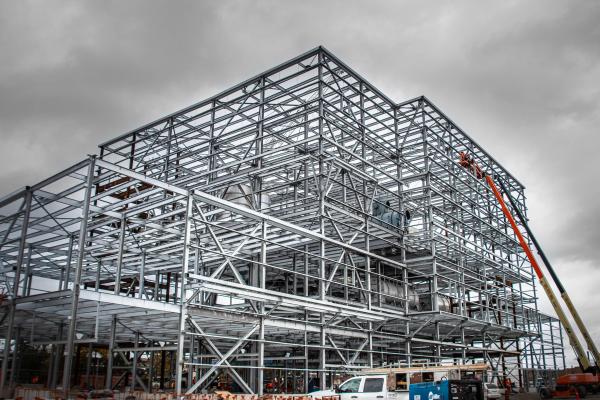
Hot-dip galvanizing is most effective when project teams treat corrosion protection as an early design, detailing, and specification decision rather than a future maintenance task. Its value comes from combining durable, uniform protection with reduced dependence on repeated field recoating, especially where access is difficult, disruption is costly, or long service life is expected.
To use HDG successfully, teams need to match the system to the environment, specify the correct standards, detail the steel for galvanizing, and recognize when added appearance or performance requirements justify a duplex system. When those decisions are made early, the result is a more predictable durability plan and fewer avoidable maintenance burdens later.
In practical terms, hot-dip galvanizing often delivers the greatest return on steel that owners expect to ignore for decades: exposed, embedded, elevated, or operationally difficult components where future access drives cost. For many modern construction projects, that is what makes HDG less of a last-minute coating choice and more of a long-term asset protection decision.