
Evaluating Rust on Hot-Dip Galvanized Steel

Rust-colored staining on hot-dip galvanized (HDG) steel often leads to immediate questions during inspection. Whether it appears during storage, after shipment, or following installation, the first assumption is frequently that the galvanized coating has failed but this assumption is often incorrect upon further evaluation.
Galvanized steel can develop discoloration, staining, or surface deposits without any meaningful loss of corrosion protection. At the same time, some rust indications do signal coating damage that requires corrective action. The challenge is determining the difference.
For engineers, owners, contractors, and inspectors, the goal is not to evaluate appearance alone. The goal is to determine whether the galvanized coating remains intact and capable of delivering the intended service life. That distinction often determines whether a rusted member can be accepted as-is, requires repair, or should be considered for replacement.
Understanding What Rust on Galvanized Steel Really Means
Not all rust-colored staining originates from the steel beneath the galvanized coating. Most conditions observed on galvanized steel fall into one of three categories:
- Wet storage stain (WSS) [sometime erroneously referred to as white rust]
- Rust transfer or surface contamination
- True red rust from exposed base steel
Although these conditions may appear similar from a distance, they have very different causes and different implications for long-term performance.
Wet Storage Stain (WSS)
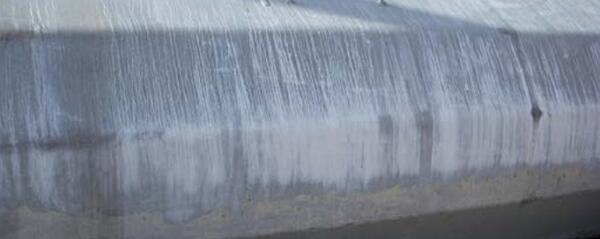
Wet storage stain is a white, powdery surface deposit on freshly galvanized surfaces. It can occur when newly galvanized surfaces are exposed to fresh water, such as rain, dew, or condensation and have no air flow over the surface causing zinc oxide and zinc hydroxide to form. Wet storage stain is found most often on tightly stacked and bundled items, such as galvanized sheets, plates, angles, bars, and pipes.
Although WSS is generally white or gray, weathering and contamination can sometimes create darker appearances that are mistaken for rust. Light or medium wet storage stain does not indicate reduction in the expected life of the product, and will weather uniformly over time upon storage or installation in standard conditions. For more information on preventing or removing wet storage stain, please see the AGA’s publication Wet Storage Stain.
Rust Transfer and Surface Contamination
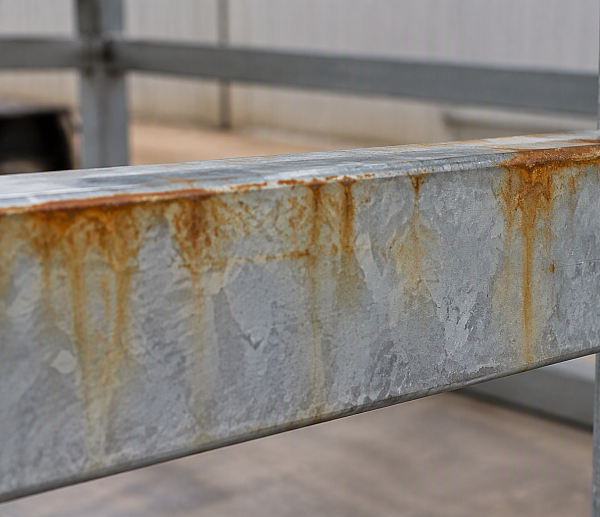
Rust transfer is one of the most misunderstood conditions encountered on galvanized steel. It occurs when corrosion products from nearby carbon steel become deposited onto the galvanized surface. Common sources include:
- Carbon steel dunnage
- Grinding dust
- Welding debris
- Iron filings
- Rusting shims or hardware
A typical example involves galvanized base plates stored next to uncoated steel materials. Rainwater carries iron oxide onto the galvanized surface and leaves behind orange or brown streaks. The stain may appear severe, but the zinc coating underneath remains fully intact. In many cases, wiping the area with a cloth or lightly brushing the surface removes the contamination and reveals sound galvanizing beneath. Inspectors can always verify coating thickness after removal of rust.
True Red Rust
Red rust, if not from another source, indicates corrosion of the steel substrate itself. Unlike rust transfer, the staining remains or returns after cleaning because it originates from exposed base steel rather than contamination sitting on the coating. Finding the bare spot, or source of the rust, should be relatively simple. This condition usually develops where the galvanized coating has been disrupted through:
- Abrasion
- Cutting
- Welding
- Drilling
- Handling damage
When exposed steel is present, the affected area should be evaluated for repair.
Appearance Versus Performance
One of the most important principles when evaluating galvanized steel is that appearance alone does not determine performance. Discoloration can exist while the galvanized coating remains intact and continues providing corrosion protection.
Taking coating thickness measurements is one of the primary methods for evaluating the condition of a galvanized coating. Magnetic coating thickness gauges provide a non-destructive way to confirm whether adequate zinc remains on the steel. Because coating thickness is directly related to service life, it often becomes the deciding factor when determining whether staining represents a maintenance concern or a corrosion protection concern.
Common Field Conditions
Observation | Likely Cause | Recommended Action |
White or gray powder on bundled steel | Wet storage stain | Evaluate a test area to determine coating condition and accept |
Brown or orange streaks that wipe away | Rust transfer or contamination | Evaluate a test area to determine coating condition and accept |
Localized red rust at damaged areas | Exposed steel from coating damage | Repair per ASTM A780 |
Rust-colored bleeding from lap joints or overlaps | Trapped moisture and residues in crevices | Clean, investigate, and seal/caulk if necessary |
Widespread red rust with pitting | Significant coating loss and steel exposure | Evaluate for repair or replacement |
Why Rust Bleeding Is Different
One situation that often causes confusion is rust bleeding at overlapping surfaces.
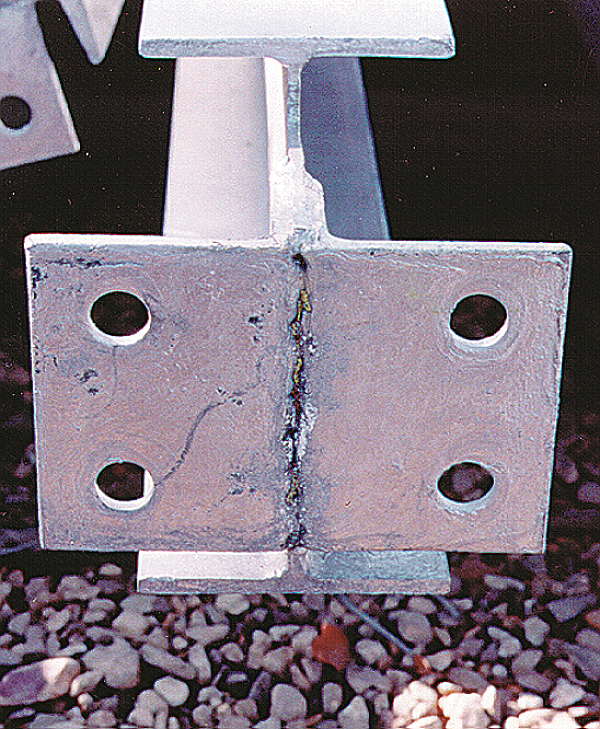
This condition can occur when moisture and residual materials become trapped within narrow gaps between overlapping components. During wet conditions, rust-colored liquid may seep from the joint and create staining on the exterior galvanized surface.
Common examples include:
- Overlapping plate details
- Gusset connections
- Handrail connections
- Stair assemblies
- Intermittently welded joints
The resulting stain often resembles active corrosion, but the root cause may be hidden within the joint rather than on the exposed galvanized surface. When rust bleeding is observed, cleaning the area and evaluating the joint geometry is generally the first step. If the condition persists, sealing the overlap with caulking can help prevent future moisture intrusion. As with other staining conditions, understanding the mechanism is critical before deciding on corrective action.
A Practical Accept, Repair, or Replace Framework
Most evaluations can be completed using a straightforward inspection process.
Step 1: Clean the Surface
Begin with a simple cleaning procedure. A cloth can remove many transfer stains. A nylon-bristle brush can be used to remove heavier deposits without damaging the galvanized coating. The objective is to determine whether the discoloration is on the coating or coming through the coating. For more information see Cleaning Galvanized Steel.
Step 2: Inspect for Exposed Steel
Once the surface is clean, inspect for:
- Coating breaks
- Gouges
- Bare spots
- Deep scratches
- Pitting
- Impact damage
Particular attention should be given to cut edges, weld areas, holes, and locations subjected to handling damage.
Step 3: Measure Coating Thickness
Magnetic coating thickness gauges provide a fast, non-destructive method for evaluating remaining zinc thickness. Recording measurements by member location creates objective documentation and reduces disputes during inspection reviews. Coating thickness verification is a primary indicator of galvanized coating performance.
Step 4: Make a Disposition Decision
Acceptance is generally appropriate when:
- Staining is removable or cosmetic
- The galvanized coating remains continuous
- No exposed steel is present
- Coating thickness remains consistent with project requirements
This outcome is common for rust transfer and many cases of WSS.
Repair is generally appropriate when:
- Localized exposed steel exists
- The coating has been damaged during fabrication, shipping, handling, or installation
- Corrosion protection has been interrupted in a specific area
For more information on repair, please see Repairing HDG Steel.
Replacement is typically reserved for conditions involving:
- Extensive exposed steel
- Significant coating loss
- Loss of base steel
- Broad corrosion with measurable durability impacts
- Conditions where repair will not restore the intended level of service life
Replacement decisions should be based on coating condition and measured performance criteria, not coating appearance alone.
Conclusion
The presence of rust or rust-colored staining on galvanized steel does not automatically indicate coating failure. In many cases, discoloration originates from moisture exposure, contamination, or rust transfer while the galvanized coating remains capable of delivering decades of corrosion protection.
The most reliable evaluations focus on facts rather than appearance. Determine the source of the stain. Confirm whether zinc remains present. Measure coating thickness when questions arise. Then choose a response based on coating condition rather than color.
This approach produces consistent decisions, avoids unnecessary repairs, and helps ensure galvanized steel delivers the long-term durability and corrosion protection it was selected to provide.