
Step-by-Step: Recoating After Welding Galvanized Steel Components

Field welding after galvanizing is sometimes unavoidable, even when best design practices aim to complete all fabrication prior to immersion in the galvanizing kettle. Changes in the field, fit-up challenges, or project modifications can require welding directly on galvanized components. While this approach introduces additional steps, proper procedure ensures the long-term corrosion protection of the steel is maintained.
When welding is performed after hot-dip galvanizing, the zinc coating in the weld area must first be removed to allow for sound weld quality. Following welding, the exposed steel and adjacent heated coating must be repaired to restore corrosion protection.
The repair process is governed by ASTM A780/A780M1, which provides the accepted methods and requirements for restoring damaged or removed zinc coatings on hot-dip galvanized steel. By following this standard and using appropriate surface preparation, welding practices, and repair materials, field-welded galvanized steel can continue to deliver durable corrosion resistance.
This guide outlines a practical, step-by-step approach to recoating after welding galvanized components, ensuring both weld integrity and long-term performance are achieved.
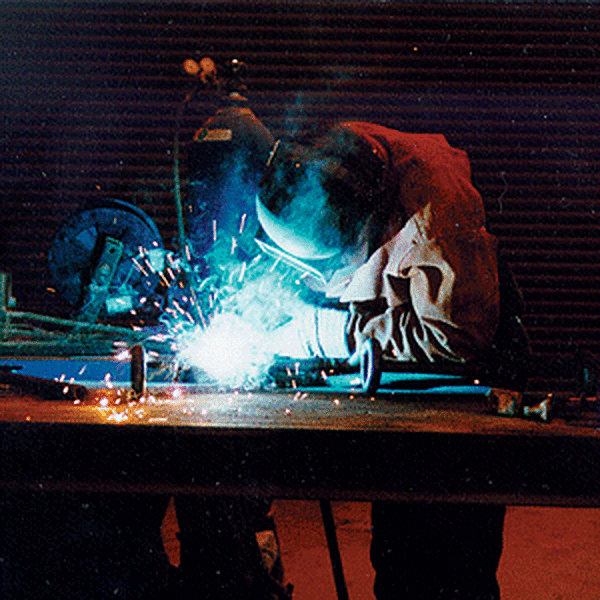
What do you need before welding galvanized steel after galvanizing?
You need proper safety controls, tools to remove zinc, and ASTM A780-compliant repair materials before welding galvanized steel after galvanizing.
Before starting, confirm the job conditions and ensure you have the essential equipment and documentation in place. A well-prepared setup improves both weld quality and the effectiveness of the final corrosion protection system.
Essentials include:
- Personal protective equipment (PPE)
- Adequate ventilation or local exhaust systems
- Tools for removing the zinc coating (typically grinding equipment)
- ASTM A780-approved repair materials (such as zinc-rich paint, thermal spray zinc, or zinc-based solders)
In addition to equipment, evaluate project constraints. Confirm accessibility to the weld area, environmental conditions during both welding and repair, and the level of corrosion protection required. These factors influence both the welding approach and the repair method selection.
AWS/ANSI Z49:1, Safety and Cutting in Welding, is the standard that covers all aspects of welding safety and health.
ASTM A780 is the standard that defines acceptable methods and requirements for repairing damaged or removed hot-dip galvanized coatings.
Proper documentation includes:
- Manufacturer product data sheets for repair materials
- Required dry film thickness (DFT) targets
- Inspection and verification methods
Taking time to plan these elements reduces rework and ensures the repaired area performs consistently with the surrounding galvanized coating.
How do you remove the galvanized coating in areas to be welded?
The zinc coating is most commonly removed by mechanically grinding the area around the weld to expose clean, bare steel before welding begins.
Removing the coating around the weld zone is essential to assure weld quality. In practice, the zinc coating is typically removed 1 to 4 inches from the weld area on all sides, depending on joint design and welding method. This provides sufficient clearance to produce a sound weld.
Step 1: Mark the removal zone
Clearly mark the area where the coating will be removed. This should include both sides of the joint and account for the full weld geometry, including any bevels or root openings. Consistent marking helps ensure adequate clearance without unnecessary removal of adjacent coating.
Step 2: Remove the zinc coating
Use grinding tools to remove the zinc coating down to bare steel. The goal is to expose clean, sound substrate metal while minimizing damage to the base material. Grinding is the most common method due to its effectiveness and accessibility in field conditions. Sand blasting is not commonly used as it is not typically effective at removing the harder, innermost alloy layer of the galvanized coating (gamma layer).
Care should be taken to achieve uniform removal without creating deep gouges or irregular surfaces that could affect weld quality. The removal area should transition smoothly into the remaining galvanized coating.
By exposing bare steel, the welder can achieve a cleaner arc, improved weld integrity, and reduced cleanup requirements.
Step 3: Final surface cleaning
After grinding, clean the area thoroughly to remove:
- Grinding dust
- Oils or grease
- Loose debris
A clean surface ensures proper weld quality and reduces contamination risks. The goal is to produce a high-quality weld while minimizing the impact on adjacent galvanized surfaces.
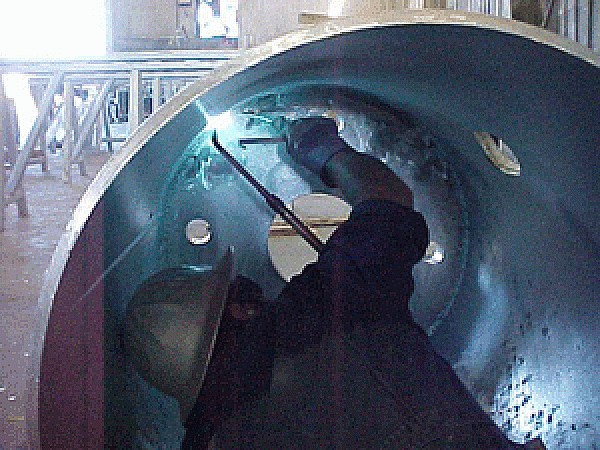
How do you prepare the weld area for coating repair after welding?
Proper surface preparation after welding is essential for achieving durable corrosion protection with repair materials.
Step 1: Remove slag, spatter, and irregularities
Clean the weld area by removing slag, weld spatter, and any sharp edges. These can interfere with adhesion and create areas where repair coatings may fail prematurely.
Step 2: Clean to sound metal
Ensure the surface is free of corrosion products, oxidation, and contaminants. The prepared surface should be clean and ready to accept the repair coating.
Edge feathering is particularly important. Smooth transitions between bare steel and existing galvanized coating promote better adhesion and continuity of the corrosion protection system.
Verify conditions before application:
- Surface is dry
- Temperature is within acceptable limits for the repair material
- No oils, dust, or contamination are present
Taking these steps ensures the repair material performs as intended and provides a continuous protective barrier.
How do you repair hot-dip galvanized coatings after welding using ASTM A780-approved materials?
Repair the hot-dip galvanized coating by applying ASTM A780-approved materials—such as zinc-rich paint, thermal spray zinc, or zinc-based solders.
AGA publishes guidance on ensuring conformance to ASTM A780. The selected repair method is intended to restore localized barrier protection, coating continuity, and cathodic protection; however, it is not the uniform, metallurgically bonded coating produced by original hot-dip galvanizing. With proper surface preparation and application, any ASTM A780 repair method can provide a durable repair that allows the galvanized component to perform as intended in its service environment.
ASTM A780 identifies three repair methods:
- Zinc-rich paint
- Thermal spray zinc (metallizing)
- Zinc-based soldering
Step 1: Select the repair method
It is important to note each repair material may perform slightly different in terms of corrosion resistance, aesthetics, or abrasion resistance. After determining which of these criteria are most important for the individual project, a preferred method may be chosen depending on evaluation of the advantages and/or disadvantages for each repair material.
AGA provides detailed guidance on evaluating HDG repair materials. AGA also provides a listing of manufacturers and products commonly used for repair of hot-dip galvanized structures.
Step 2: Apply according to manufacturer requirements
For example, for zinc-rich paint, follow the manufacturer instructions on the Technical Data Sheet (TDS). Common details in a TDS might include:
- Surface preparation requirements
- Mixing procedures
- Pot life limitations
- Recoat windows
Adhering to the manufacturer’s instructions for zinc-rich paint best ensures the coating performs as intended.
For more information on applying HDG repair materials in accordance with ASTM A780/A780M to achieve durable HDG coating repairs, refer to the AGA Touch Up & Repair video series. These videos provide highly beneficial visual aids to those needing assistance with touch-up and repair, whether in the plant or the field.
Comparison of ASTM A780 repair methods:
Method |
Field Practicality |
Surface Preparation |
Zinc-rich paint |
High |
Moderate |
Thermal spray zinc |
Low |
Extensive |
Zinc-based soldering |
Moderate |
Moderate |
Note: The repaired area may initially differ in appearance from the surrounding hot-dip galvanized coating, but over time it typically weathers to blend more closely. For more information, see AGA article on Natural Weathering and HDG Repairs.
Putting the repaired coating back into service with confidence
Before returning the component to service, verify that the repaired area meets quality and performance expectations.
Inspection checklist:
- Complete coverage of the repair area
- Manufacturer’s instructions followed
- Dry film thickness (DFT) within specified range
Key takeaways:
- Hot-dip galvanized coatings must be removed before welding to ensure weld quality
- ASTM A780-approved repair methods must be used to restore corrosion protection after welding
By following these two essential steps and maintaining proper preparation, welding, and repair practices, galvanized steel components can continue to deliver long-term corrosion resistance even after field modifications.