
Visual Guide to Hot-Dip Galvanized Coating Appearance

Hot-dip galvanized (HDG) coatings can exhibit a wide range of appearances while still providing the same corrosion protection and fully complying with applicable specifications. Differences in steel chemistry, section thickness, fabrication practices, and cooling conditions influence how the zinc coating develops and solidifies during galvanizing.
Because appearance alone is not an indicator of coating performance, inspectors, engineers, and owners should evaluate galvanized steel based on coating uniformity, adhesion, and thickness rather than aesthetic properties. Variations such as matte gray areas, bright zinc surfaces, mottled finishes, and spangle are common and acceptable characteristics of galvanized coatings.
This guide covers common HDG coating appearances, the factors that cause them, and how to distinguish between normal variations and conditions requiring further evaluation.
Understanding Common Hot-Dip Galvanized Appearances
During galvanizing, fabricated steel is immersed in a bath of molten zinc, where a metallurgical reaction forms a series of zinc-iron alloy layers bonded to the steel. As the coating cools and solidifies, its final appearance reflects the interaction between steel chemistry, galvanizing conditions, and cooling rate.
Bright, Shiny Galvanized Coatings
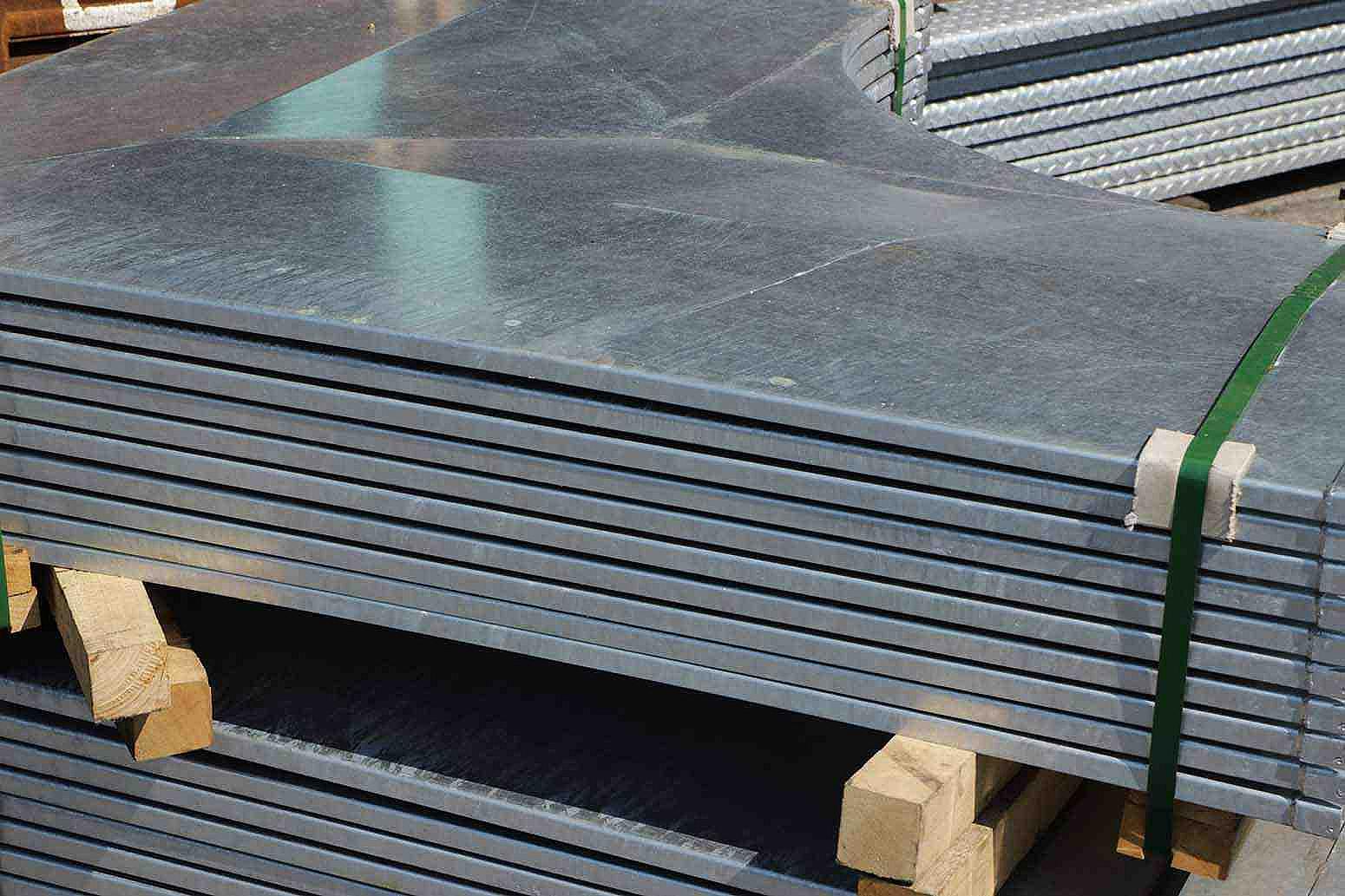
Bright zinc surfaces typically occur when a relatively thick outer layer of free zinc remains on the coating surface after withdrawal from the galvanizing bath. Faster cooling rates often promote this appearance.
Bright coatings are common on:
- Thin steel sections
- Edges and corners
- Fast-cooling components
- Certain structural shapes and fabricated assemblies
A bright finish should not be interpreted as superior protection. It simply reflects the coating structure present at the time of solidification.
Matte Gray Galvanized Coatings
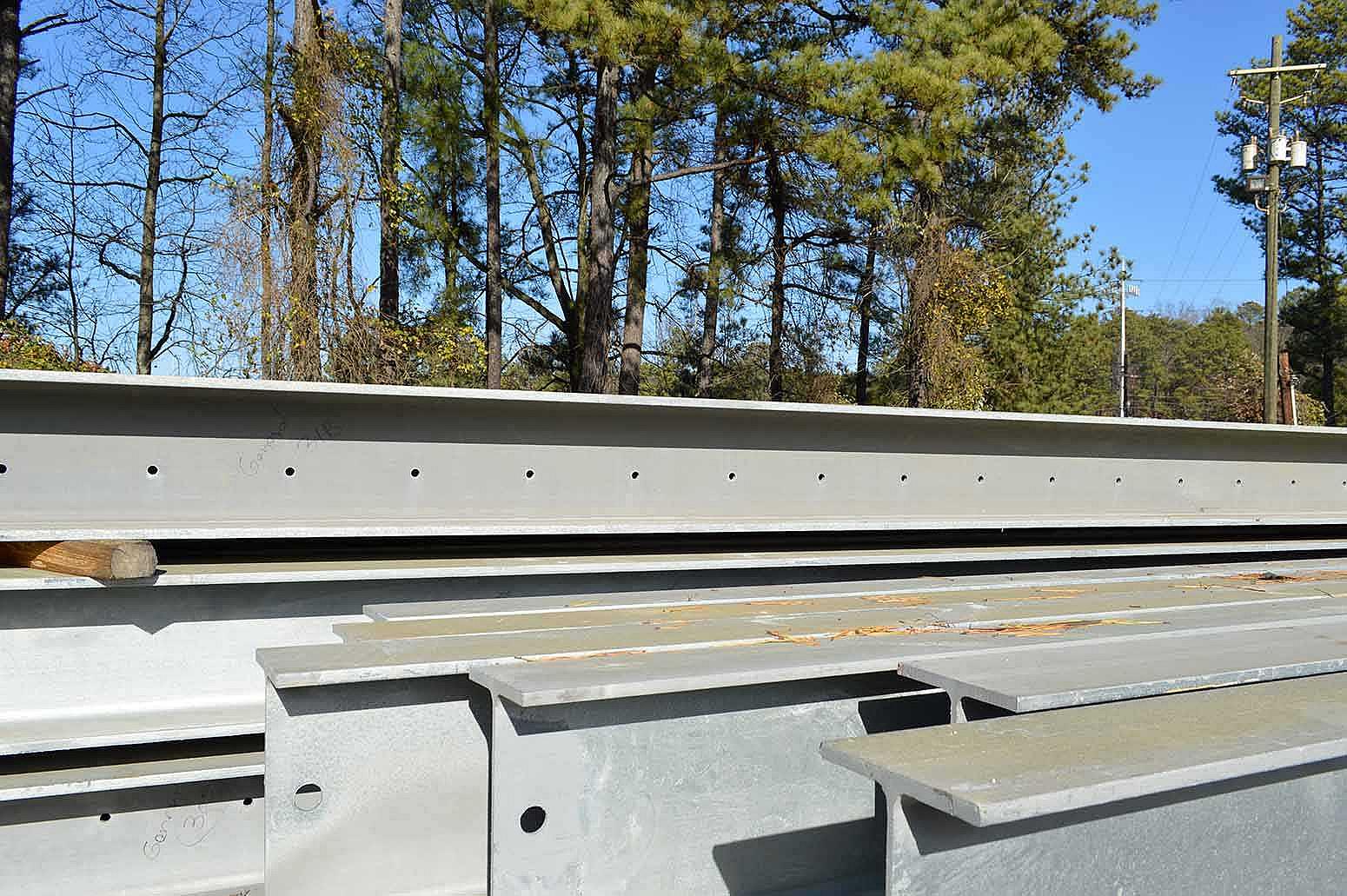
Matte gray coatings develop when zinc-iron alloy layers extend to the coating's outer surface. These coatings commonly form on steels with more reactive chemistry or on large components that cool slowly following withdrawal from the zinc bath.
Matte gray coatings are often associated with:
- Reactive steel chemistry
- Greater alloy layer growth
- Thicker zinc coatings
- Heavy structural sections
Although noticeably different in appearance from bright coatings, matte gray surfaces provide exceptional protection so long as coating thickness requirements are met.
Spangled Galvanized Coatings
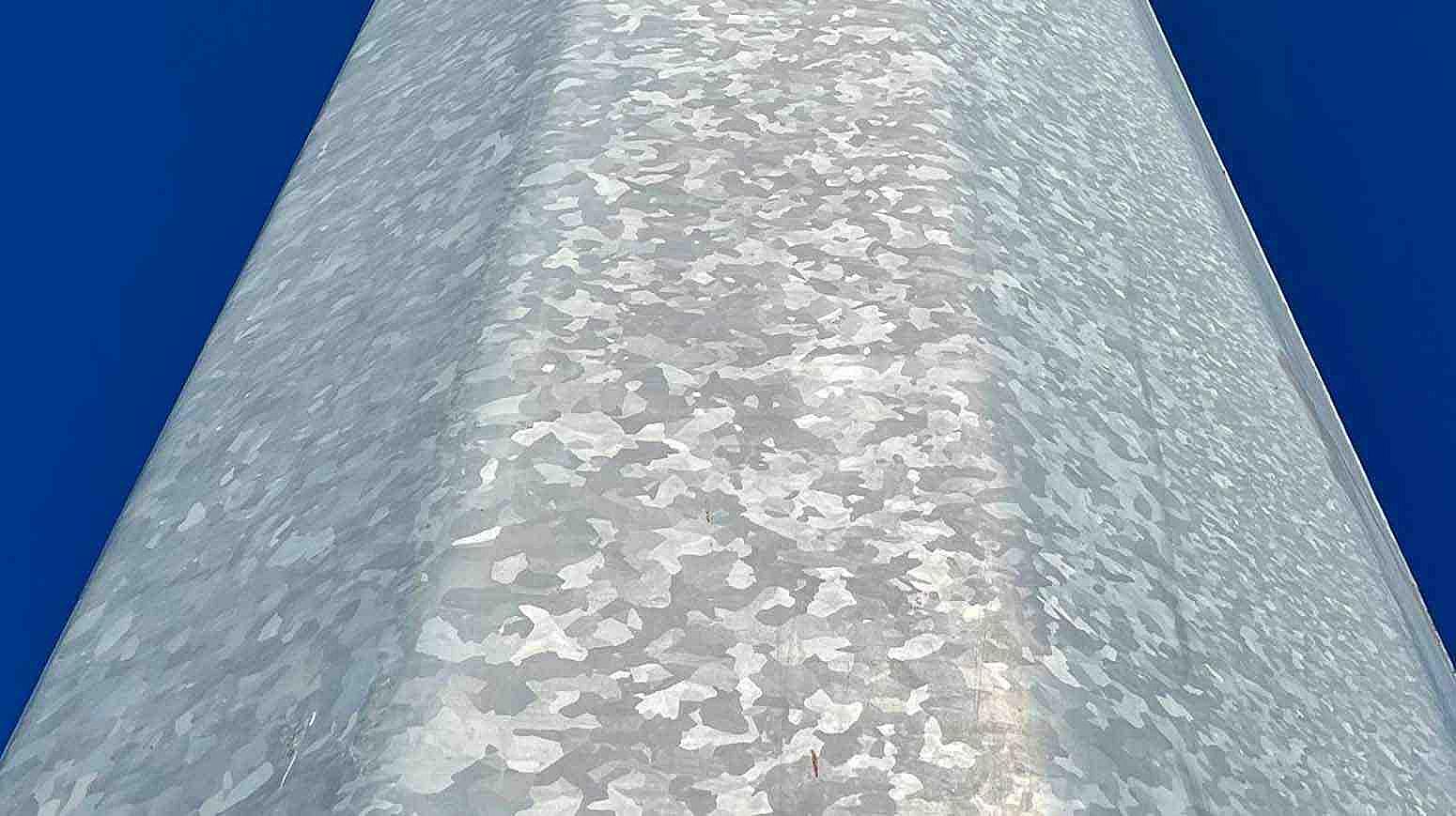
Spangle refers to the visible crystalline structure that forms as molten zinc solidifies, sometimes referred to as "flowers of zinc." The presence of spangle on the galvanized coating is the result of minor bath additions forming alloy crystals with zinc. Elements that produce spangle include lead, tin, aluminum, cadmium, antimony, copper and a variety of others.
Spangle is primarily an aesthetic characteristic and does not indicate coating quality or expected service life.
Mixed Galvanized Finishes
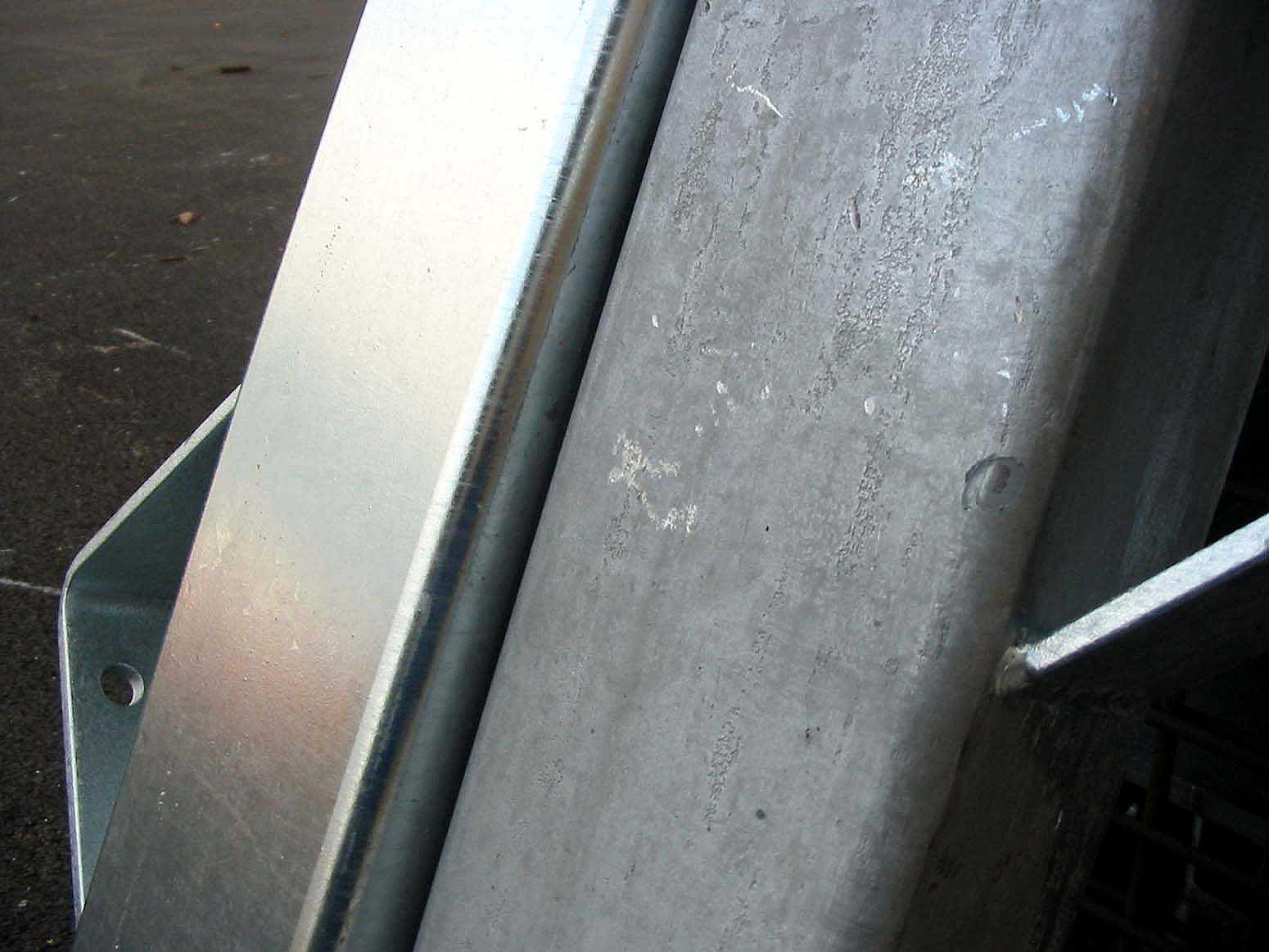
Galvanized assemblies frequently exhibit both bright and matte areas on the same piece. Variations in steel chemistry between components, differing section thicknesses, and localized cooling conditions all contribute to these mixed appearances.
Examples commonly include:
- Welded assemblies fabricated from different steel heats
- Plate-and-angle combinations
- Thick-to-thin section transitions
- Built-up structural connections
These appearance variations are commonly experienced with mixed steels and are not indicative of coating deficiency.
Mottled Galvanized Coatings
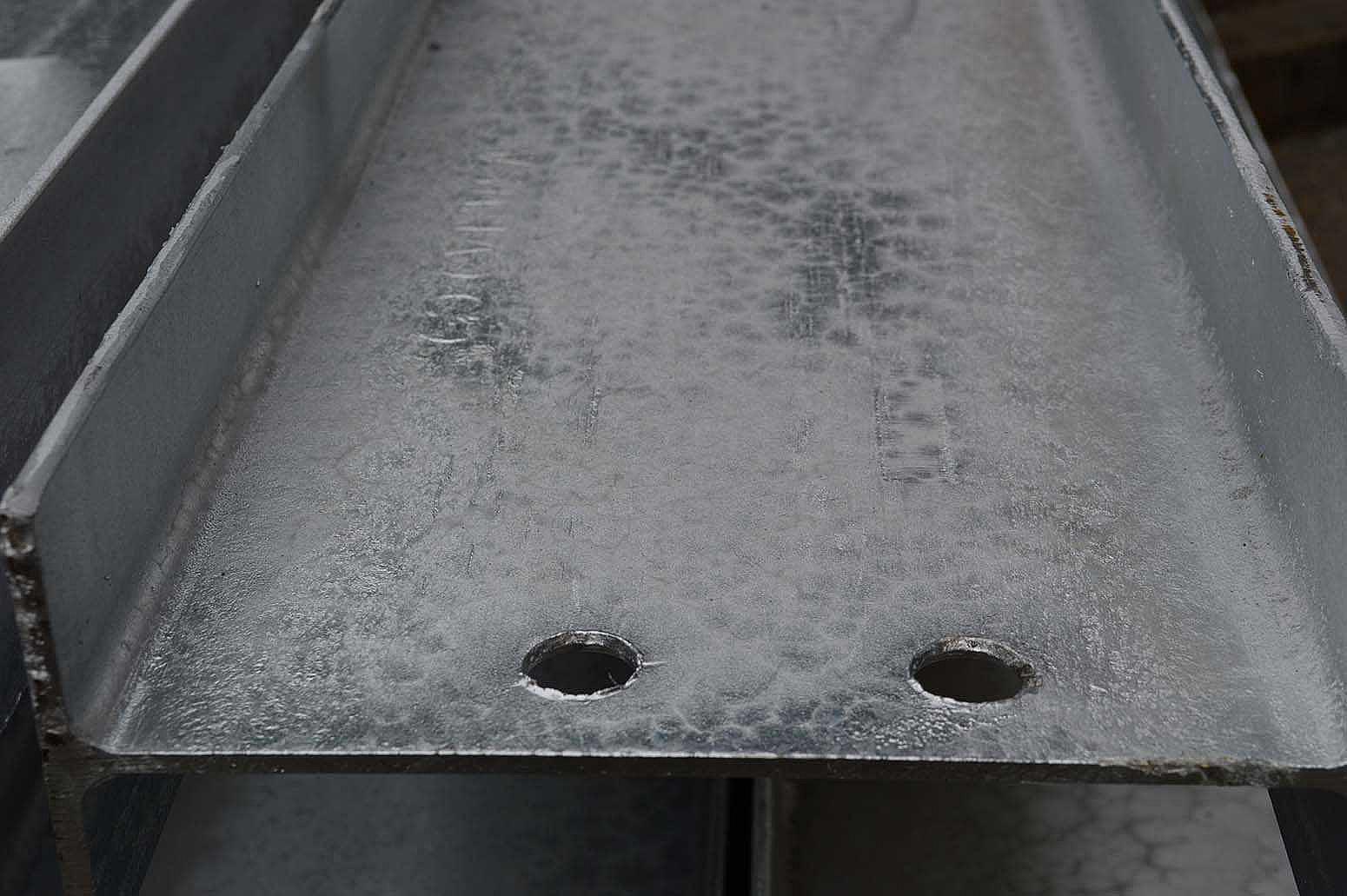
A steel part with both dull and shiny coating can also be the result of a different cooling rate. In the example, (right) the outer edges of the product were cooled rapidly, allowing a free zinc layer to form on top of the intermetallic layers. The center of the product remained above 550 F longer and the metallurgical reaction between zinc and iron continued in the solid state consuming the free zinc layer, resulting in a matte gray look.
Examples commonly include:
- Air-cooled parts
- Edges and holes
- Slow-cooling components
Mottling is simply an HDG coating made up of different zinc-iron alloy layers.
Why Steel Chemistry Influences Appearance
Steel chemistry is one of the most significant factors affecting galvanized coating appearance.
Elements such as silicon and phosphorus influence the reaction rate between steel and molten zinc. Certain chemistry ranges promote more aggressive alloy layer growth, which can produce coatings that are:
- Thicker
- Duller in appearance
- More matte gray in color
- Rougher in texture
Conversely, steels with less reactive chemistry are more likely to retain a brighter outer zinc layer.
As a result, two fabricated components galvanized in the same kettle at the same time may emerge with noticeably different appearances despite both having coatings that meet ASTM specifications.
This is particularly common in fabricated assemblies containing material sourced from multiple heats or mills.
How Cooling Conditions Affect Coating Appearance
Cooling conditions following withdrawal from the galvanizing bath also influence final coating appearance.
Different areas of fabricated steel cool at different rates, producing natural visual variation across the surface.
Common examples include:
- Edges and Corners - Edges typically cool more rapidly than surrounding areas and may retain a brighter appearance.
- Flat Surfaces - Large flat surfaces often cool more slowly and may develop a more matte gray appearance.
- Heavy Connections and Built-Up Areas - Areas with greater thermal mass retain heat longer and may continue alloy growth after withdrawal from the bath. These regions often appear duller or more mottled than adjacent surfaces.
Such appearance differences are expected outcomes of the galvanizing process and do not necessarily indicate changes in coating performance.
Conditions Requiring Further Evaluation
The following conditions should receive closer inspection because they may affect coating continuity or performance:
- Bare spots exposing steel
- Flaking or peeling coatings
- Significant dross inclusions
- Shipping & Installation damage
Where coating continuity cannot be confirmed, the galvanizer should be consulted to determine appropriate corrective action.
Acceptance Should Be Based on Performance, Not Appearance
Perhaps the most important principle in galvanized coating inspection is that appearance does not determine corrosion protection.
Freshly galvanized steel can display a wide range of acceptable finishes immediately after processing. Over time, exposure to the atmosphere causes zinc surfaces to weather and develop a uniform protective zinc patina, reducing many of the visual differences initially observed.
Acceptance decisions should therefore be based on established specification requirements, including coating continuity, adhesion, and thickness, rather than aesthetic expectations.
References
American Galvanizers Association (AGA)