

Corrosion Resistance of Galvanized Steel: What You Need to Know

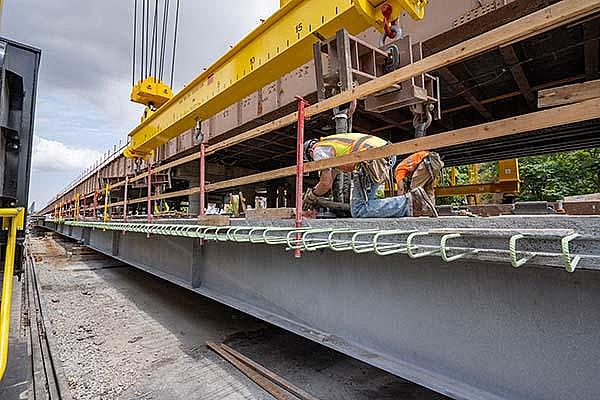
Galvanized steel plays a central role in modern infrastructure because it provides durable, predictable corrosion protection across a wide range of environments. From transportation structures to utilities and industrial assets, engineers rely on galvanizing to deliver long service life with minimal maintenance. That expectation is not based on assumptions—it is based on a measurable, well-understood relationship between zinc coating thickness and corrosion rate.
Unlike barrier coatings alone, galvanized steel performs consistently in atmospheric exposure, soil contact, freshwater systems, and even certain marine applications when properly specified. Its durability comes from both material behavior and the ability to align coating properties with real-world exposure conditions.
In practice, performance is not automatic. It depends on how well the system is matched to the environment and how effectively design details limit corrosion drivers such as moisture retention and contaminant buildup. When properly applied, galvanizing provides decades of protection with a high level of confidence in expected service life.
Corrosion resistance of galvanized steel is governed by three factors:
- Environment severity
- Coating thickness
- Design and detailing
When these three factors are aligned, galvanized steel delivers durable, low-maintenance performance across a broad range of exposure conditions.
Why does galvanized steel resist corrosion in the first place?
Hot-dip galvanizing protects steel through three complementary mechanisms:
- Barrier protection — the zinc coating isolates steel from the environment
- Cathodic (sacrificial) protection — zinc corrodes preferentially to steel
- Zinc patina formation — a dense layer of corrosion products slows further attack
This three-part system is fundamental to galvanizing performance and is well established in field data.
Barrier Protection
Barrier protection is simple. The zinc coating creates a literal barrier over the underlying steel, protecting it from the corrosive environment. If the barrier is intact, the steel is protected and corrosion will not occur. However, if the barrier is breached, corrosion may begin.
Cathodic Protection
Cathodic protection is the second line of defense if the barrier is breached. Hot-dip galvanizing protects steel cathodically similarly to the sacrificial anode method. Basically, a metal (zinc) anodic to the base metal (steel) is placed in the circuit to corrode in place of the base metal. The Galvanic Series of Metals is a list of metals arranged in order of electrochemical activity in seawater (the electrolyte). This arrangement of metals determines what metal will be the anode and cathode when the two are put in an electrolytic cell. Metals higher on the list are anodic to the metals below meaning they provide cathodic or sacrificial protection when the two are connected.
Zinc Patina Development
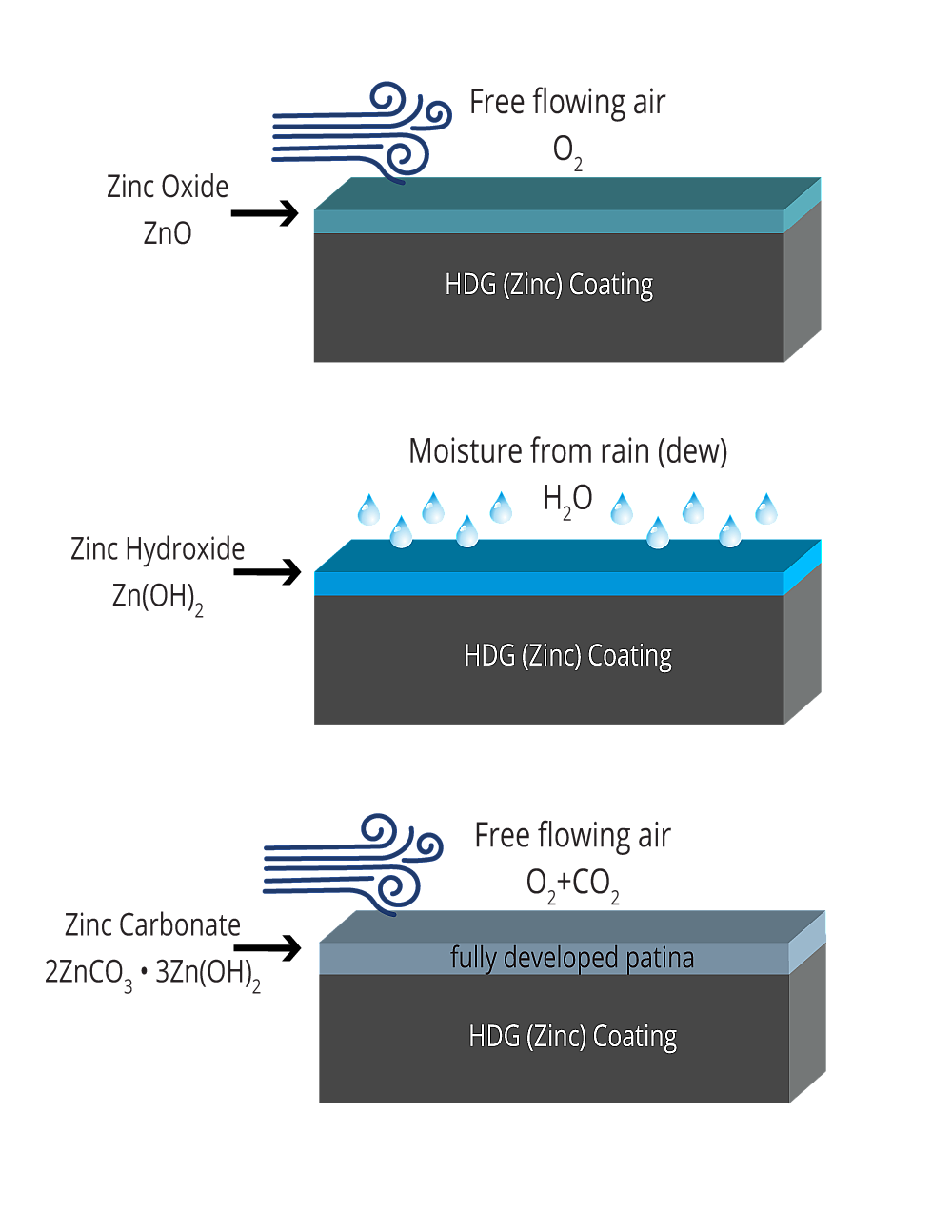
Finally, as zinc weathers, it reacts with oxygen, moisture, and carbon dioxide to form corrosion products—primarily zinc oxide, zinc hydroxide, and eventually zinc carbonate. These compounds develop into a dense, adherent patina that acts as an additional barrier called the patina and significantly reduces the corrosion rate.
This patina does not “seal” the surface like a paint film, but it slows the transport of moisture and contaminants, allowing the coating to corrode at a lower and more predictable rate over time.
The practical takeaway is simple: galvanized steel is self-protecting at both intact and damaged locations.
Which environmental factors most affect corrosion resistance of galvanized steel?
Corrosion resistance is primarily controlled by moisture exposure and the chemistry of contaminants present at the surface.
Time of wetness: Time of wetness is the duration that a metal surface remains sufficiently wet to support electrochemical corrosion reactions.
In dry conditions, corrosion is negligible. When moisture is present—especially with dissolved salts—it creates an electrolyte that allows corrosion to proceed.
The most influential environmental factors include:
- Chlorides (marine spray, de-icing salts)
- Sulfur compounds (industrial emissions, sulfates)
- Relative humidity and condensation cycles
- Rainfall chemistry and acidity
- Airborne particulates and debris
Deposits become particularly important because they retain moisture and increase electrolyte conductivity. This creates localized corrosion cells that accelerate zinc consumption beyond what general environmental classifications might suggest.
Corrosion behavior also evolves over time. Initial exposure often shows higher corrosion rates before the patina stabilizes. Once stabilized, corrosion typically proceeds at a slower, more consistent rate.
Certain microclimates present higher risk due to persistent moisture or contaminant buildup:
- Splash zones and areas exposed to de-icing salts
- Sheltered crevices and undersides
- Runoff paths where contaminants concentrate
These localized conditions often control performance more than the broader environmental category.
How does galvanized steel perform in atmospheric exposures for infrastructure?
Galvanized steel performs well in atmospheric environments because the zinc coating forms a stable patina that reduces long-term corrosion rates.
Environment |
Corrosivity |
Dominant Factors |
Typical Use Cases |
Durability Implications |
Rural |
Low |
Low pollutants, low salts |
Transmission towers, fencing |
Very long service life |
Urban |
Moderate |
Particulates, runoff |
Transportation structures |
Moderate corrosion, variable by design |
Industrial |
Medium–High |
Sulfur compounds, deposits |
Plants, processing facilities |
Elevated corrosion, patina disruption |
Marine |
High–Very High |
Chlorides, wet-dry cycles |
Coastal bridges, ports |
High corrosion, detailing critical |
Environmental categories (such as ISO 9223 C1–CX) provide a useful baseline, but they do not capture local variability. Effective specification requires translating those categories into actual exposure conditions—particularly where moisture and contaminants accumulate.
Rural environments typically support stable patina formation with very low corrosion rates. Urban environments introduce variability due to runoff, sheltering, and airborne debris. Industrial environments increase corrosion through sulfur compounds, while marine environments are driven by chloride exposure and repeated wetting and drying.
Key design modifiers strongly influence actual performance:
- Orientation (horizontal vs vertical surfaces)
- Sheltering (protected vs exposed areas)
- Joint configuration (crevice potential)
- Water retention and drainage
Callout: Performance can vary significantly within the same city—local deposition and moisture retention often control outcomes more than regional classification.
How do coating type and thickness control galvanized steel performance?
Coating thickness is the primary determinant of service life because zinc is consumed gradually over time at a relatively predictable rate once stabilized.
Batch hot-dip galvanizing: Batch galvanizing produces a thick, metallurgically bonded zinc coating formed through immersion in molten zinc.
Continuous galvanizing: Continuous galvanizing produces thinner coatings applied to sheet steel in a controlled production line.
Thicker coatings provide greater corrosion allowance, extending time to first maintenance. Over the long term, zinc consumption tends to follow a near-linear trend in stable environments, which supports reliable service life estimation.
Several coating characteristics influence durability:
- Alloy layers in batch coatings can provide greater resistance to abrasion and localized attack
- Coating thickness increases with steel thickness and chemistry
- Process control determines minimum coating requirements
Industry standards establish minimum coating thickness based on product type and intended exposure, ensuring that coatings meet performance expectations across environments.
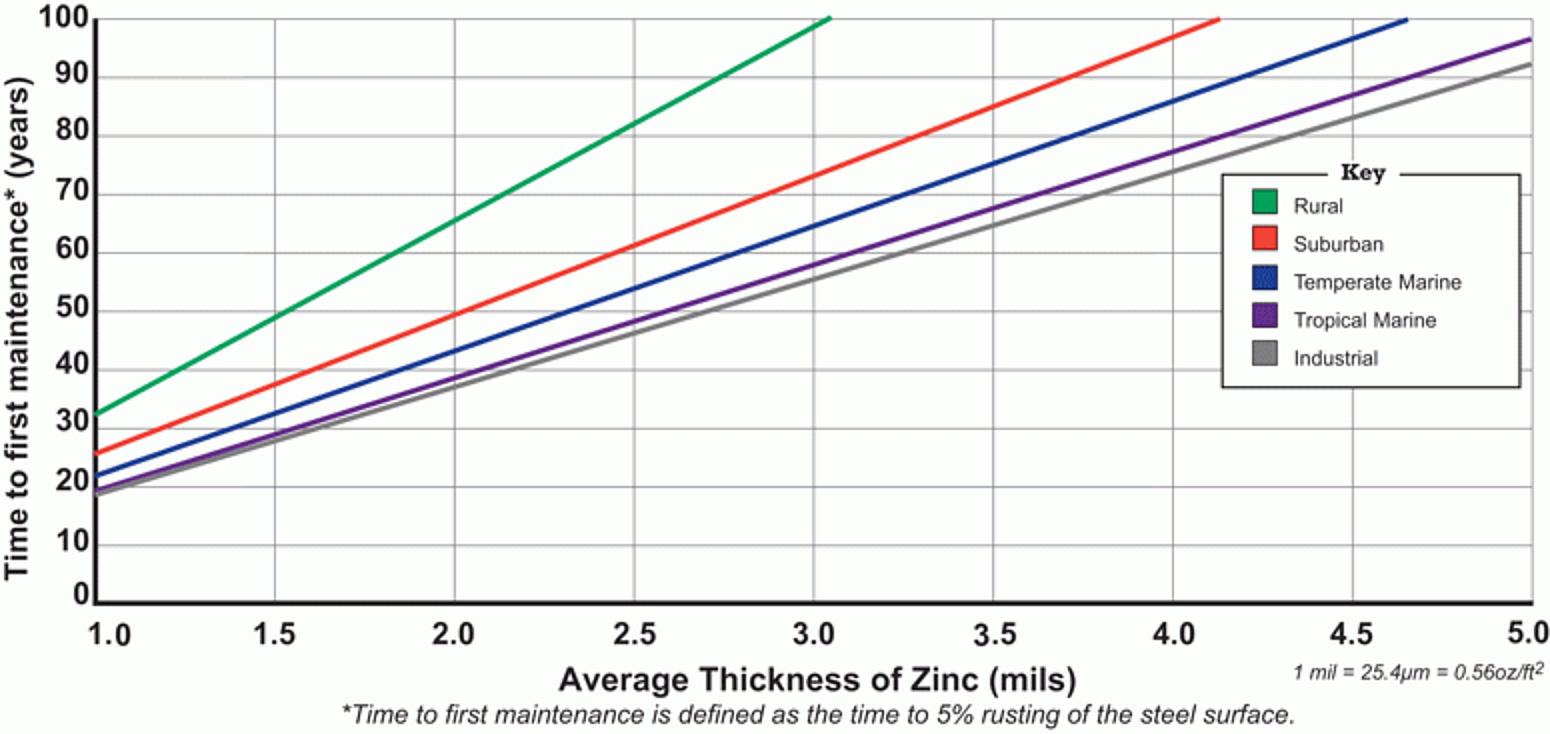
The AGA developed a Time to First Maintenance (TFM) Chart to assist with estimating how long galvanized steel will last in the 5 most common exposure conditions in North America based on zinc coating thickness. TFM is defined as 5% rusting of the base steel surface, which means 95% of the surface has some zinc coating remaining, and an initial maintenance is recommended to extend the life of the structure.
How do design and handling decisions extend corrosion resistance in real projects?
- Provide drainage and avoid standing water
- Vent enclosed sections to improve drying
- Eliminate crevices and moisture traps
- Isolate dissimilar metals where galvanic contact may occur
Detailing mistakes can significantly reduce performance. Common issues include:
- Crevices and tight lap joints
- Unsealed overlaps
- Horizontal surfaces that trap debris
- Shelves or ledges that hold moisture
Handling and storage also matter. Newly galvanized steel should be stored dry and with adequate airflow. Trapped moisture can produce wet storage stain, especially in tightly stacked or poorly ventilated conditions. Preventing this condition is primarily a matter of proper handling rather than coating performance.
In closing, it’s always a good idea to:
- Classify the exposure environment and contaminants
- Identify microclimates (sheltered areas, splash zones, runoff)
- Select coating thickness for the most severe condition
- Apply detailing that minimizes time of wetness
- Verify storage and handling practices
Engineers should supplement general guidance with corrosion maps, field performance data, or exposure testing when conditions are uncertain or particularly aggressive.
Ultimately, galvanized steel performs best when expected service life, maintenance intervals, and coating selection are aligned during design. When that alignment is achieved, it delivers the predictable durability that infrastructure projects require.