

Batch Hot-Dip Galvanizing vs. Continuous Galvanizing


When someone uses the term “galvanized steel,” they could technically be referring to two very different zinc coatings and processes: batch hot-dip galvanizing and continuous galvanizing.
*Note: The American Galvanizers Association and our members deal only in the batch hot-dip galvanizing process (ASTM A123, A153, A767) and not the continuous hot-dip galvanizing process for sheet products (ASTM A653 involving coating thickness grades such as G60 and G90). For technical queries related to the continuous hot-dip galvanizing process, you may reach out to the GalvInfo Center ([email protected] | 1-888-880-8802).
Both galvanizing processes apply zinc to steel through immersion in molten zinc, and both provide corrosion protection through zinc's sacrificial properties. The manufacturing process, coating characteristics, intended applications, and expected service life can differ significantly. One of the most common misconceptions in the steel industry is that all galvanized coatings perform the same since they all are primarily made from zinc. In reality, the corrosion performance of a galvanized coating is heavily influenced by its thickness, composition, and method of application. Zinc coating thickness is directly related to service life. Thicker zinc coatings generally provide longer service lives because more zinc is available to provide barrier protection for the steel.
Batch Hot-Dip Galvanizing
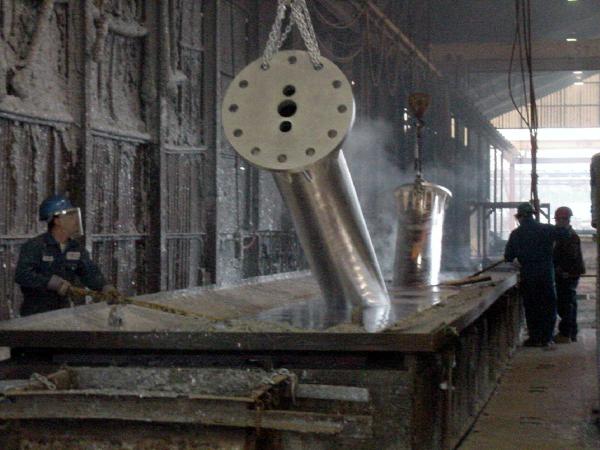
Batch hot-dip galvanizing, also known as after-fabrication galvanizing, protects steel by completely immersing a fabricated steel article into a bath of molten zinc. Prior to galvanizing, the steel is cleaned to remove oils, rust, mill scale, and other contaminants that would interfere with the reaction between iron and zinc. As the steel is immersed in the zinc bath, a metallurgical reaction occurs between the zinc and the iron in the steel. This reaction forms a series of zinc-iron alloy layers covered by an outer layer of pure zinc. The resulting coating becomes an integral part of the steel rather than simply adhering to its surface.
Batch galvanizing is a total immersion process. Every exposed steel surface contacts molten zinc, producing complete coverage on edges, corners, threads, hollow sections, and difficult-to-access areas. Coating thickness at edges and corners is often equal to or greater than the coating on flat surfaces.
Batch galvanizing is commonly used for:
- Structural steel
- Bridges
- Utility structures
- Solar foundations
- Sign supports
- Guardrail
- Transmission poles
- Fabricated steel assemblies
- Fasteners and hardware
Continuous Galvanizing
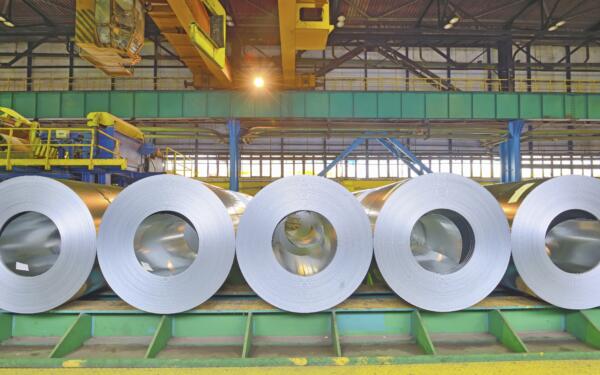
Continuous galvanizing is appropriate for steel sheet, strip, and wire products where the coating process occurs at the end of the manufacturing line before being recoiled for shipment. After the steel passes through the molten zinc bath, air knives remove excess zinc to produce a smooth and controlled coating thickness. Because continuous sheet galvanizing occurs before fabrication, products are later cut, punched, and formed where any resulting bare areas are repaired or rely on zinc's sacrificial properties for protection.
Continuous galvanizing is commonly used to manufacture:
- Automotive body panels
- Roofing and siding
- Appliances
- HVAC ductwork
- Culvert pipe
- Light-gauge building products
- Wire
Key Differences
Choosing between batch hot-dip galvanizing and continuous galvanizing usually depends on which coating process is suitable for the given product. For the few fabrications that can be specified for either process, key differences may guide the choice.
Continuous galvanizing is highly effective for products requiring:
- Consistent surface appearance
- High production volume
- Formability
- Subsequent manufacturing operations
- Interior or atmospheric exposure
Batch hot-dip galvanizing is often selected when the priority is:
- Long-term corrosion protection
- Thick zinc coatings
- Complete coverage of fabricated assemblies
- Reduced maintenance
- Infrastructure durability
- Exterior atmospheric exposure
Conclusion
Although both processes fall under the broad category of galvanized steel, batch hot-dip galvanizing and continuous galvanizing are not interchangeable. Continuous galvanizing produces a controlled, formable coating for steel products used in manufacturing. Batch hot-dip galvanizing produces a thicker metallurgically bonded coating on fully fabricated steel articles.