
Salt Spray Testing—What it Can and Cannot Tell You About Hot-Dip Galvanized Steel

One of the most common questions the AGA receives is whether salt spray testing can predict how long hot-dip galvanized (HDG) steel will last in service. The short answer is no.
Salt spray testing is a valuable quality-control tool, but it was never intended to predict the service life of galvanized steel in atmospheric environments. Unfortunately, "hours to red rust" is often interpreted as a durability score, leading to specifications, purchasing decisions, and coating comparisons that do not reflect real-world performance.
Understanding what salt spray testing measures—and what it does not—is essential when evaluating galvanized steel.
What Is Salt Spray Testing?
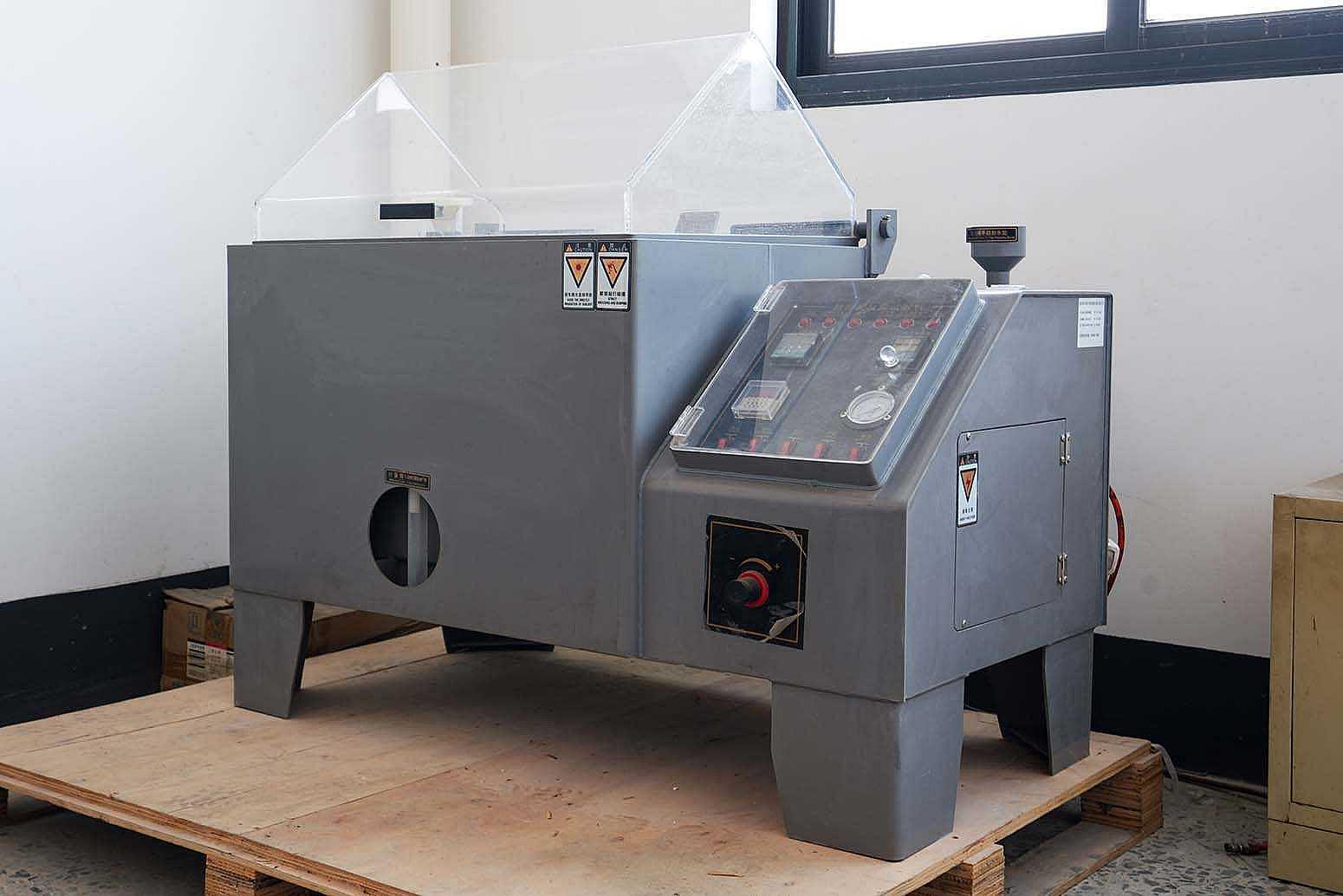
Salt spray testing, conducted according to standards such as ASTM B117 and ISO 9227, exposes coated specimens to a continuous fog of salt solution in a controlled chamber.
The test creates an aggressive, highly corrosive environment designed to reveal coating defects and process inconsistencies quickly. Because results can be obtained in days or weeks rather than years, salt spray testing has become a widely accepted quality-assurance tool in the coatings and corrosion protection industry.
For most coatings, when used correctly, salt spray testing can help identify:
- Coating discontinuities or bare spots
- Handling damage
- Porosity or coating defects
- Batch-to-batch process variation
- Differences between similar coating treatments or sealers
For these purposes, salt spray testing can be extremely valuable.
Problems arise when the results are used as a predictor of long-term atmospheric performance.
Why Salt Spray Does Not Predict HDG Service Life
One of the things that makes hot-dip galvanized coatings unique is the zinc coating develops a protective patina during service.
This patina consists of stable zinc corrosion products that form gradually during exposure to the atmosphere. As the patina develops, it slows the corrosion rate of the zinc coating and becomes one of the primary reasons galvanized steel can provide decades of maintenance-free service.
The problem is that a salt spray chamber does not allow this process to occur naturally.
In a typical ASTM B117 or ISO 9227 test, specimens are continuously exposed to warm salt fog. The surface remains wet throughout the test, creating a chloride-rich environment with no opportunity for natural drying. Real-world outdoor exposure conditions are very different.
Atmospheric environments include:
- Wet and dry cycles
- Rainfall and rinse-off effects
- Changes in temperature and humidity
- Variable chloride deposition
- Carbon dioxide exposure
- Differences between sheltered and exposed surfaces
These factors play an important role in the formation and stabilization of zinc's protective patina.
Because salt spray testing maintains continuous moisture, it promotes corrosion mechanisms that are often different from those controlling long-term atmospheric corrosion. The test accelerates zinc consumption but does not accurately reproduce the way galvanized coatings perform outdoors.
As a result, there is no reliable conversion between salt spray hours and years of field service. A statement such as "1,000 hours of salt spray equals 20 years outdoors" has no technical basis for galvanized coatings.
What Salt Spray Testing Is Good For
Salt spray testing should be viewed as a quality-control and comparative evaluation tool rather than a service-life model.
Appropriate uses include:
Quality Assurance
Galvanizers and coating applicators often use salt spray testing to verify that production processes remain consistent over time.
Defect Detection
The aggressive environment can quickly expose coating defects that might otherwise remain unnoticed until after installation.
Comparative Testing Within Similar Systems
Salt spray testing can be useful when comparing:
- The same coating with different sealers
- Similar production lots
- Process modifications
- Alternative pretreatments
In these applications, the goal is to compare similar systems under identical conditions, not predict long-term durability.
What Salt Spray Testing Should Not Be Used For
Salt spray testing is frequently misapplied in specifications and marketing materials.
Examples of inappropriate use include:
Predicting Service Life
Salt spray testing should not be used to estimate how many years galvanized steel will last in a specific environment.
Comparing Dissimilar Coatings
Comparisons between HDG, stainless steel, paint systems, electroplated zinc, and zinc-aluminum-magnesium coatings based solely on salt spray hours can be misleading because each material corrodes through different mechanisms.
Converting Hours into Years
A higher salt spray rating does not automatically translate into a longer field life.
The corrosion processes occurring in the chamber may differ substantially from those occurring in service.
What Should Be Used Instead?
For galvanized steel, service life predictions are most reliable when based on three factors:
- Environment
- Zinc coating thickness
- Field performance data
Decades of atmospheric exposure testing have shown that galvanized coating life is directly related to coating thickness and environmental corrosivity. This is why galvanizing specifications focus on minimum coating thickness requirements rather than minimum salt spray hours. Tools such as the American Galvanizers Association's Zinc Coating Life Predictor (ZCLP) use actual field corrosion data to estimate time to first maintenance based on environmental conditions and zinc thickness. These approaches provide far more meaningful information than a chamber-hour rating.
When evaluating galvanized steel for a project, questions such as these are far more useful than asking for a salt spray number:
- What is the expected environment?
- How severe is the chloride exposure?
- Will surfaces receive regular wet-dry cycling?
- What coating thickness is being specified?
- What service life is required?
- Is sufficient historic real-world data available?
The answers to those questions provide a realistic basis for predicting performance.
Key Takeaway
Salt spray testing remains a valuable tool for quality assurance, process control, and defect detection for many coating systems. However, it should not be used as a predictor of hot-dip galvanized steel service life. Galvanized steel achieves its long-term performance because zinc develops a stable protective patina under real atmospheric conditions. Continuous salt fog testing suppresses that natural process and creates corrosion mechanisms that do not accurately represent most service environments. If your goal is quality control, salt spray testing can be useful. But if your goal is predicting service life, focus on environment, zinc coating thickness, and documented field performance—not chamber hours. AGA's official position statement on salt spray testing along with link to an information fact sheet can provide further clarification.