

Isolated Instances of the Kirkendall Effect


Why am I experiencing peeling only on thick steel sections? Can the Kirkendall effect occur in isolated areas?
The Kirkendall effect occurs when galvanized steel remains above 390° F (200° C) for an extended period after withdrawal from the kettle. The heat causes an unbalanced interdiffusion of zinc and iron to occur, leaving behind tiny voids between the top two layers, eta and zeta. If enough voids are allowed to develop along the part or in a localized area, a loss of eta-layer adhesion can occur, potentially causing peeling (Figure 1).
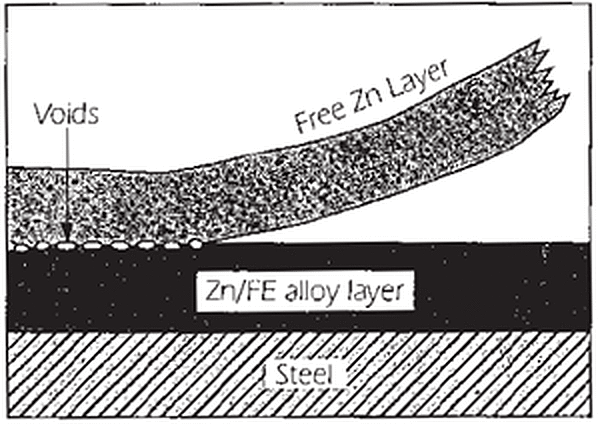
The remaining zinc-iron alloy layers of the HDG coating remain adherent and continue to provide corrosion protection, but peeling may cause aesthetic concern or challenges in smoothing HDG surfaces for the application of subsequent coatings. This phenomenon is usually associated with large tubes, tanks, and thick pieces of steel because they traditionally take long periods of time to cool down after galvanizing. For more information on Kirkendall effect on large items see AGA Knowledgebase article Effect of Extending Cooling Times on Large Diameter and Thick Tubes.
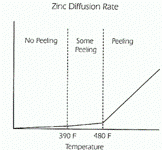
It’s important to remember that not all instances of HDG coating delamination are caused by the Kirkendall Effect (see AGA Knowledgebase article Peeling vs. Flaking). Although delamination by peeling is most attributed to stacking of hot parts or slow cooling times due to the design & geometry of a galvanized part, there are rare instances where the conditions for the Kirkendall Effect are present on items that are typically not at risk.
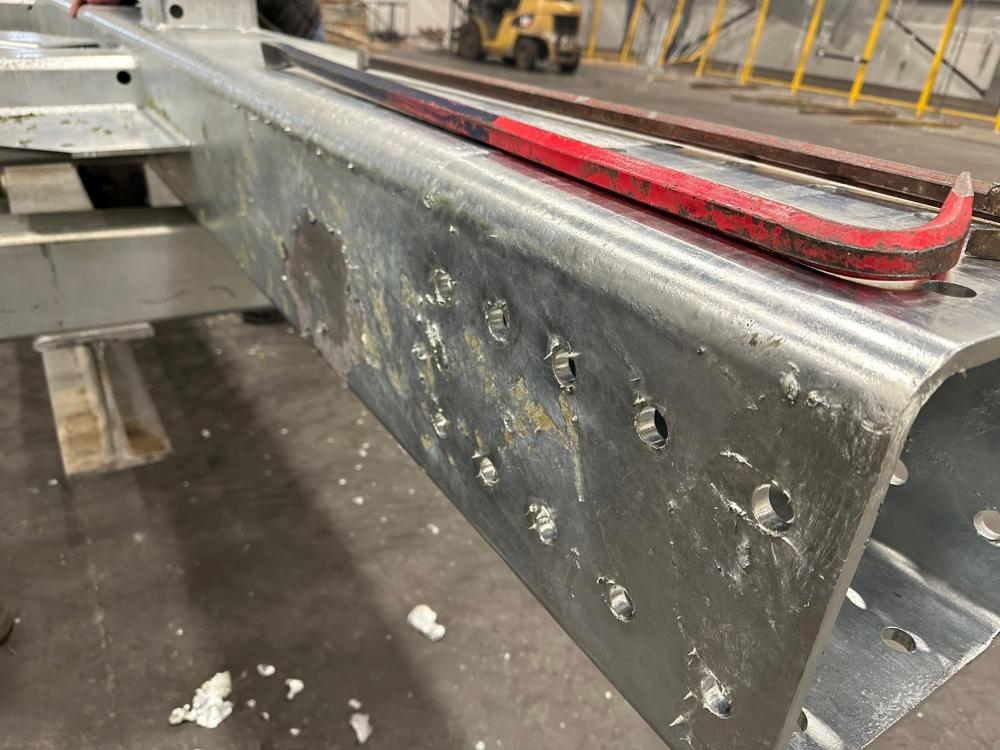
Figure 3 shows an example of the Kirkendall effect taking place on an isolated portion of small 4” square hollow section (SHS) (Figure 3). Initially, this seemed strange because the steel in the area is not especially thick and the surrounding areas do not exhibit Kirkendall effect.
But when inspecting the internal section, a galvanizing byproduct known as dross was found frozen to the inside wall directly where the peeling occurred on the outside (Figure 4). The dross acted as insulation keeping the isolated area hot long enough for peeling to be induced by the Kirkendall Effect.
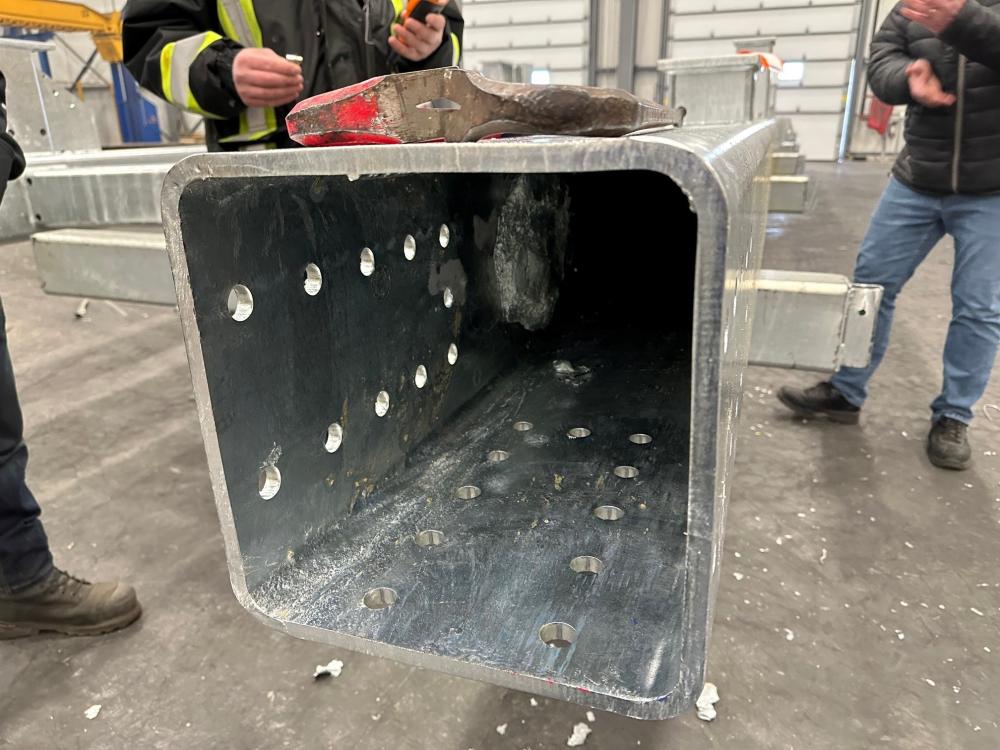
Oftentimes the reason zinc or dross freezes inside hollow items is because of improperly sized or placed vent and drain holes. This causes molten zinc and galvanizing byproducts to remain inside internal cavities and surfaces, keeping them at reaction temperature for longer than the surrounding areas. Additionally, dross is known to retain heat, often causing problematic hot spots in galvanizing kettles when not quickly removed. This time adherent dross caused a “hot spot” on the HSS fabrication, in turn causing an isolated instance of Kirkendall effect.
© 2026 American Galvanizers Association. The material provided herein has been developed to provide accurate and authoritative information about after-fabrication hot-dip galvanized steel. This material provides general information only and is not intended as a substitute for competent professional examination and verification as to suitability and applicability. The information provided herein is not intended as a representation or warranty on the part of the AGA. Anyone making use of this information assumes all liability arising from such use.