
Optimizing Turnaround Time for Steel to be Galvanized

What can Fabricators and/or Specifiers do to expedite their steel’s movement through the Galvanizing Plant?
One of the benefits of specifying hot-dip galvanized steel is the ability to galvanize, inspect, ship, and install the steel all in the same day. The factory-controlled process is not subject to the environmental factors that slow many coating processes down. However, some essential preparation steps may be necessary to ensure the process is safe, successful, and streamlined. Completing these steps before shipment to the galvanizer helps keep projects on schedule by minimizing potential delays. Here are some precautions that can be taken to ensure a speedy turnaround time.
Is the Galvanizer expecting your items? Can items be expedited?
Sometimes, galvanizers receive steel fabrications without identifying paperwork or customer details. This can extend turnaround time as the galvanizer must confirm the customer and purchase order information before processing. Advanced communication or identifying paperwork can help to avoid such verification delays.
Just like any business, galvanizers have their busy times throughout the day, week and year. Many galvanizers offer expediting services for items requiring a speedy turnaround, and advanced notice is beneficial to ensure such requests can be reasonably fulfilled.
Does the Galvanizer have an accurate idea of what to expect?
Inaccurate load descriptions, dimensions, weights, and quantities can slow galvanizers down as they must confirm items to be galvanized with the customer. Some items may need to be meticulously hung from racks or require some other special rigging, while large items may need special lifting procedures. Crane capacity is another important factor a galvanizer must consider. An item close to a crane’s maximum capacity could exceed capacity with the additional weight of the zinc.
Reactive steel can cause major headaches at a galvanizing plant if it is not expected. Submitting MTRs (Material Test Reports) to your galvanizer prior to delivery helps ensure a smooth and efficient process. By allowing the galvanizer a chance to review steel chemistry for reactivity, customers can benefit from more expedient and tailored precautions to promote a successful galvanized coating.
Ultimately, an accurate and thorough description of the load will allow galvanizers to more efficiently process materials involving additional requirements, reactive steel, and/or load weights approaching crane capacity.
Do all steel fabrications have adequate venting and drainage holes (if applicable)?
Galvanizers unanimously agree, steel without proper vent and drain holes is the number one speed bump with customer turnaround times. In some cases, this can be resolved reasonably quickly. For example, the customer can return and cut the appropriate holes, or some galvanizers can do it in house at an additional cost. Either way, until they are placed movement through the plant is delayed.
However, some owners require all new holes to be approved by the Engineer of Record. If engineer approval is required, common for bridge and building projects, turnaround time may be extended by days or even weeks if insufficient holes are identified after delivery to the galvanizing plant. For the quickest turnaround, refer to AGA’s publication, Design of Products to be Hot-Dip Galvanized After Fabrication for acceptable venting and drainage hole requirements (size and placement) and have them cut before they arrive at the galvanizing plant.
Is the steel clean from any residual coatings (paint, powder coating, lacquers, varnishes), weld slag, contaminants, and/or identification markings (wax, oil, crayon, etc.)?
Stubborn coatings and other contaminants on steel can significantly slow down movement through the galvanizing plant. This is because unclean steel will not galvanize. Some, but not all, galvanizers have the means to remove coatings beyond the normal chemical cleaning methods prior to galvanizing. Even if the galvanizer has the means to remove contaminants from steel, this step adds extra time and labor.
These are some known contaminants that cannot be removed by a typical galvanizer’s pre-treatment steps:
- Welding by-products (slag, spatter, or other residues)
- Anti-spatter sprays containing silicone (Some solvent-based anti-spatter sprays are suitable such as Weld-Aid Weld Kleen HD).
- Paint stick, grease pencil, crayon, or other oil-based paints and markers
- Stickers
- Burrs (could include excessively rough edges from flame cutting)
- Very heavy or extremely adherent mill scale
- Mill coatings such as varnishes or lacquers common on some types of pipe
- Epoxies, types of vinyl, and asphalt
- Sand and other impurities on castings
- Very heavy or thick deposits of wax or grease
- Rapid-dry ink for mill stencils (non-water-based)
For temporary identification marking, it’s recommended to use water-soluble markers, ink, or chalk sticks. These do not need to be removed prior to galvanizing. Here are some markers specifically sold as "galvanized steel markers" and come in several colors.
- Metal-Pro Galvanized Steel Marker from SKM
- Mighty Marker and Flomaster from Arro-Mark
- Paint-Riter+ Galvanizer from Markal
Does the steel have adequate lifting apparatuses (if applicable)?
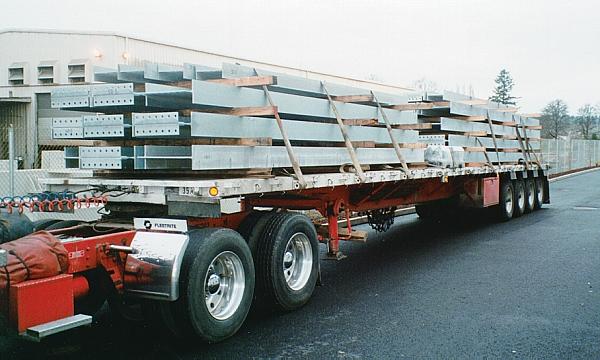
When steel arrives at the plant, it is typically going to be offloaded from the trailer with a forklift first. Loading steel onto wooden pallets or dunnage helps ensure the forklifts have safe, accessible lifting points (Figure 1). Next, the steel will be lifted by crane to go through the galvanizing process. Sometimes larger fabrications require temporary lifting apparatuses to be welded on and then removed and repaired after galvanizing. Sorting out lifting requirements with galvanizers prior to delivery can prevent potential delays.
Is the Galvanizer aware of parts which require special attention or masking in order for the article to function properly (threads, pipe ends, handrail, etc.)?
Communication with galvanizers about any special requirements beyond ASTM A123 before delivery helps keep projects on schedule. Advanced explanations of any areas requiring masking, thread cleanup, handrail smoothing, or preparation for painting will prevent rework or extra steps later, supporting efficient turnaround times.
Sometimes, galvanizers are asked to go beyond ASTM A123 requirements regarding aesthetics for items to be publicly displayed. Architecturally exposed structural steel (AESS), may require additional processing to promote aesthetics above and beyond A123 requirements. It’s recommended to discuss all additional requests with the galvanizer and include them in the purchase order. For further information on AESS, please see AGA’s Hot-Dip Galvanized Architecturally Exposed Structural Steel Guide.
Conclusion
Generally, the AGA recommends early communication with galvanizers to get ahead of commonly experienced delays at the plant. While many items galvanize easily with little to no intervention, some fabrications require additional preparation to successfully galvanize. With near infinite steel fabrication possibilities, not all delays can be anticipated. This article is meant to assist both parties in avoiding the most common delays at the galvanizing plant. And as each plant is unique, following your galvanizer’s guidance is always recommended.
© 2026 American Galvanizers Association. The material provided herein has been developed to provide accurate and authoritative information about after-fabrication hot-dip galvanized steel. This material provides general information only and is not intended as a substitute for competent professional examination and verification as to suitability and applicability. The information provided herein is not intended as a representation or warranty on the part of the AGA. Anyone making use of this information assumes all liability arising from such use.