
Fit, Function, and Intended Use: Inspection of Galvanized Surfaces Used in Bolted Connections

When Do Normal HDG Surface Conditions Affect Fit-Up in Bolted Connections?
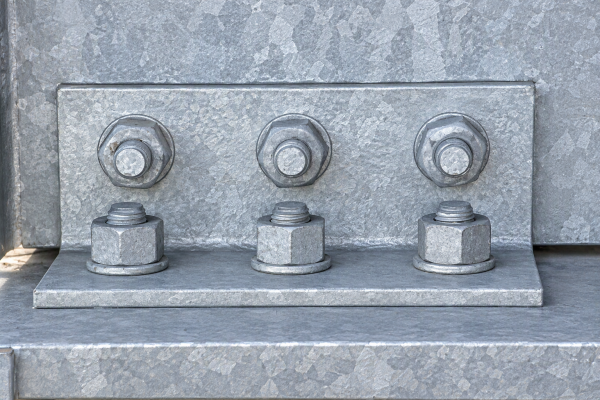
Hot-dip galvanized (HDG) coatings are not required to be perfectly smooth or visually uniform to meet the finish and appearance requirements of ASTM A123. Variations in coating texture and appearance occur naturally without affecting corrosion protection or the function of the finished product. Bolted connections, however, introduce areas where minor coating conditions can interfere with assembly.
Intended use is defined in A123 as the objective or function a product is designed to be used for which is not primarily aesthetic in nature. This includes functional features of the product, required fit-up to other parts, or ability to be painted or powder coated. For bolted assemblies, understanding this distinction can simplify inspection and prevent both unnecessary rejection and overlooked details known to affect fit-up or assembly.
When Does Galvanizing Affect Intended Use?
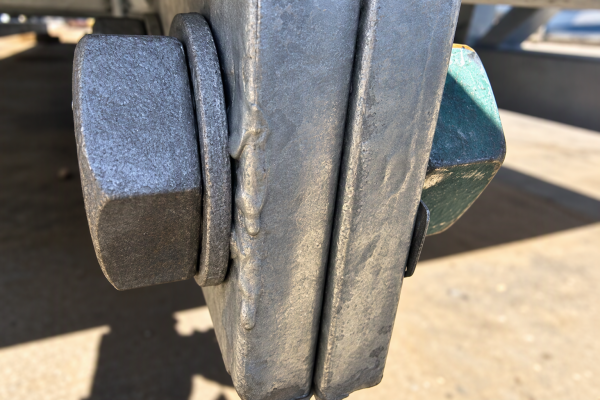
The same galvanizing surface condition of dross or zinc runs can be acceptable in one location and unacceptable in another. For example, a small zinc prominence or particle of dross on a rolled beam likely has no effect on the beam's function. Minor roughness that does not interfere with intended use is not grounds for rejection under ASTM A123. However, excess zinc or dross located between two faying surfaces, or between a galvanized surface and the underside of a washer or nut, could prevent proper fit-up. For more information on intended us please see Understanding A123 & Intended Use.
Through Holes
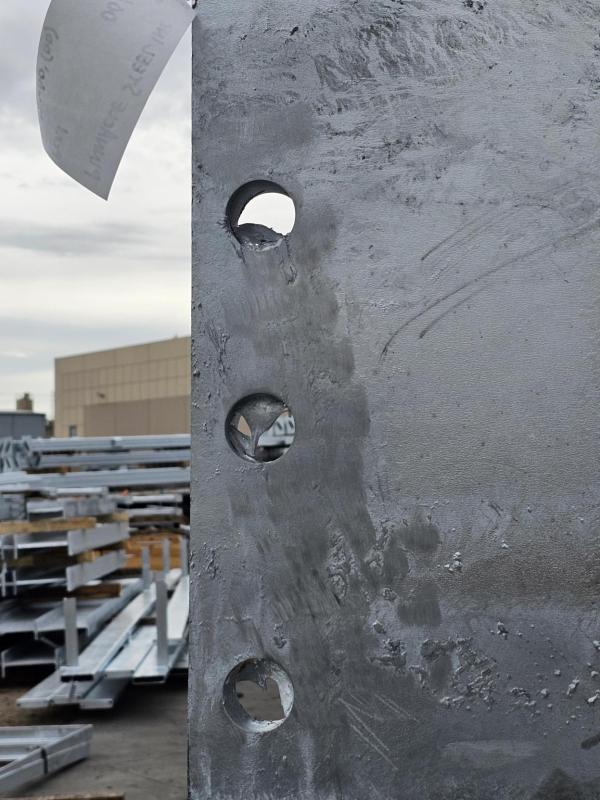
All holes 1/2 inch in diameter or larger are required by ASTM A123 to be clean and reasonably free from excess zinc. While this requirement aids bolt passage, proper hole sizing for hot-dip galvanizing is the primary factor.
Clearance holes sized 1/8 inch larger than the nominal bolt diameter are considered sufficient to accommodate the passage of galvanized bolts without additional hole clearing. However, bolt fit-up depends on both appropriate hole sizing and the galvanizer’s requirements—not the galvanizer’s requirements alone. For bolts less than 1 inch in nominal diameter, standard through-holes often require clearing or reaming by the fabricator or erector after galvanizing, even when reasonably free from excess zinc. The galvanizer’s responsibility to meet this cleanup requirement does not extend to compensating for hole sizes that provide insufficient allowance for coating thickness.
ASTM A123 does not extend the same cleanup responsibility to holes smaller than 1/2 inch, which can clog because of zinc’s relatively low viscosity. This established process limitation should be addressed early in project planning. For more information on responsibilities and methods for addressing these conditions, see the AGA resource Clogged Holes During Galvanizing.
Faying Surfaces
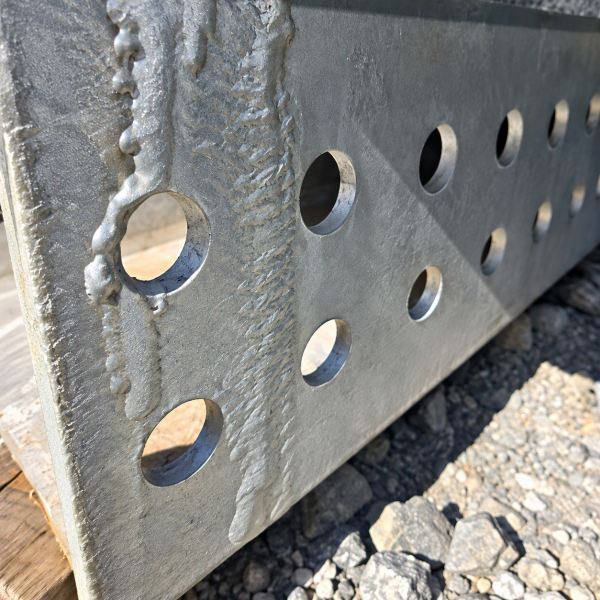
Localized zinc accumulation, runs, or dross on faying surfaces may require smoothing if they prevent the connected plies from achieving firm contact during assembly. The RCSC Specification describes firm contact as the condition in which the plies are solidly seated against each other, but not necessarily in continuous contact.
Whether a surface condition will actually prevent firm contact, however, often cannot be confirmed until the parts are fit up in the field. At the galvanizing plant, the galvanizer can only make a reasonable judgment about which conditions are likely to interfere with assembly based on the location and size of the condition. The erector or installer, who brings the plies together and snug-tightens the joint, is ultimately in the best position to determine whether firm contact has been achieved.
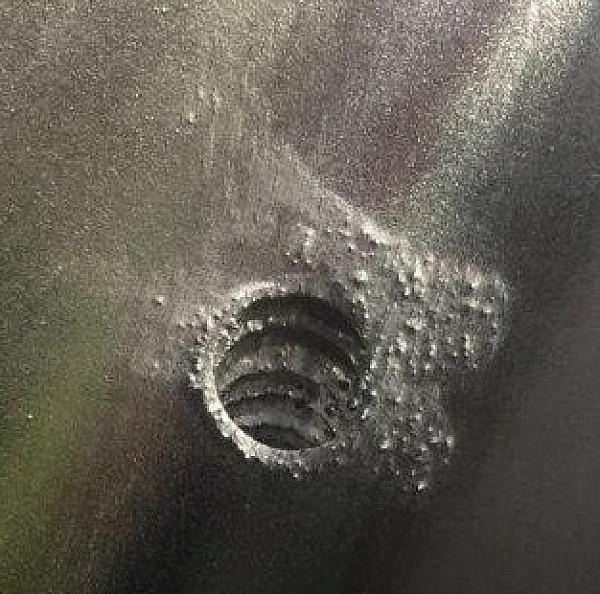
ASTM A123 does not define a specific degree of smoothness for connection surfaces, which leaves room for interpretation under the intended-use requirement. This means the galvanizer should make a reasonable attempt to facilitate field assembly to knock down raised surface conditions on known connection surfaces. Because this initial smoothing cannot reasonably guarantee fit-up, final smoothing may be necessary during installation.
Progressive dipping can also affect the finish of mating surfaces. When an item is too large to fully immerse in the kettle but at least half of it fits, each end is dipped in sequence to achieve full coverage with a small but visible overlap area. Localized coating thickness can vary at the overlap line. If that area falls on a connection surface, it can be reasonably smoothed. AGA publishes information on how to plan for the overlap line: Considerations for Progressive Dipping.
© 2026 American Galvanizers Association. The material provided herein has been developed to provide accurate and authoritative information about after-fabrication hot-dip galvanized steel. This material provides general information only and is not intended as a substitute for competent professional examination and verification as to suitability and applicability. The information provided herein is not intended as a representation or warranty on the part of the AGA. Anyone making use of this information assumes all liability arising from such use.