Menu • Quick Links • Search
Login
ClosePercheron Horse
Colorado Springs, CO United States | 2025
 2026
2026
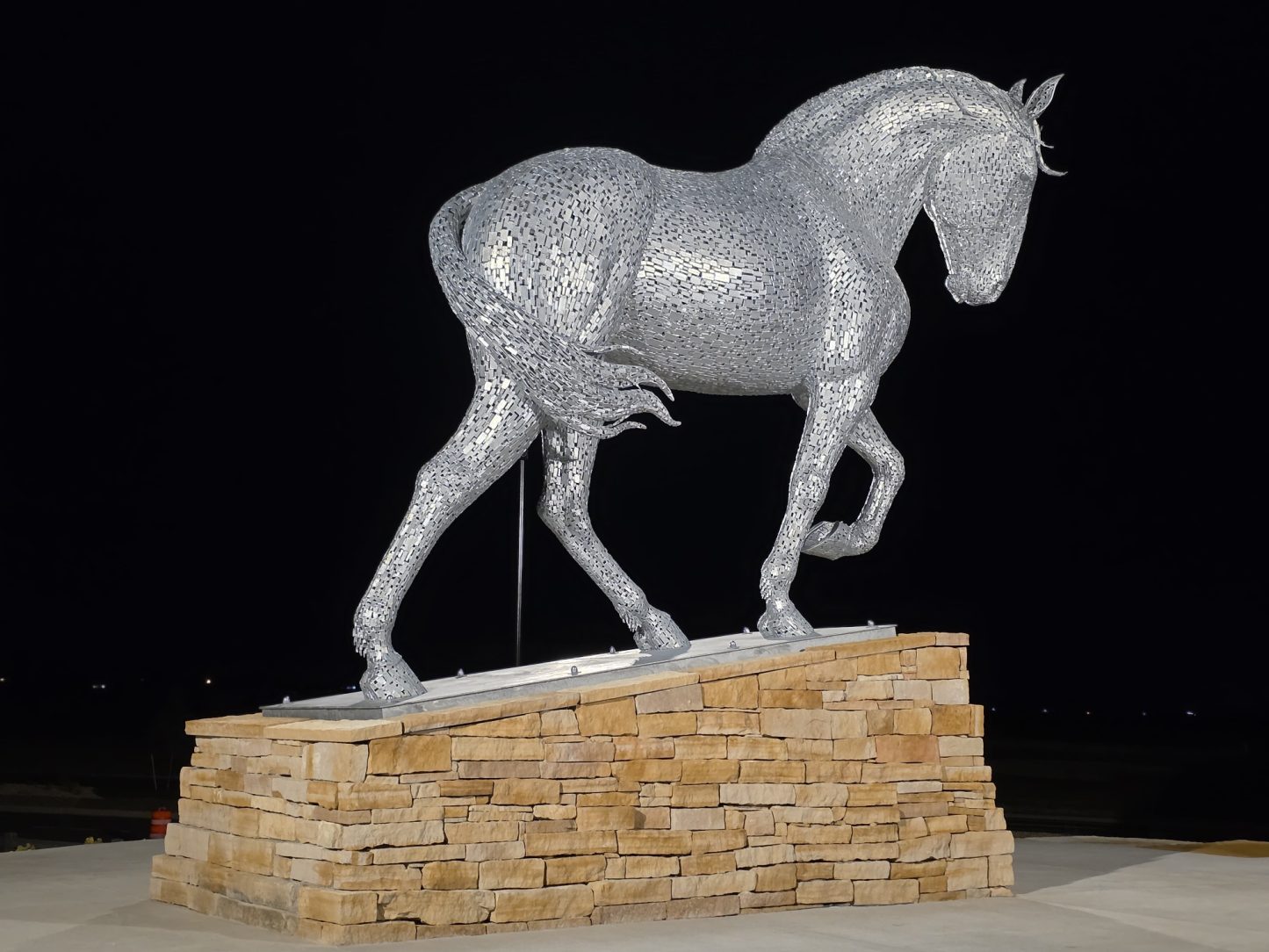
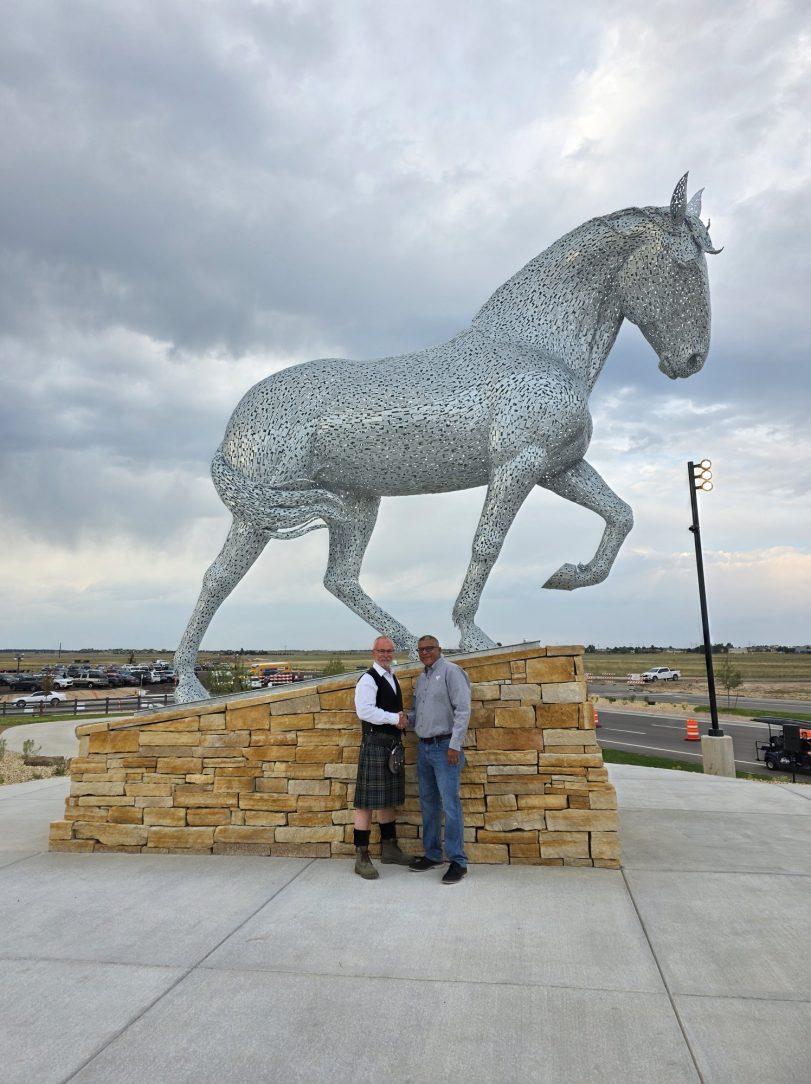
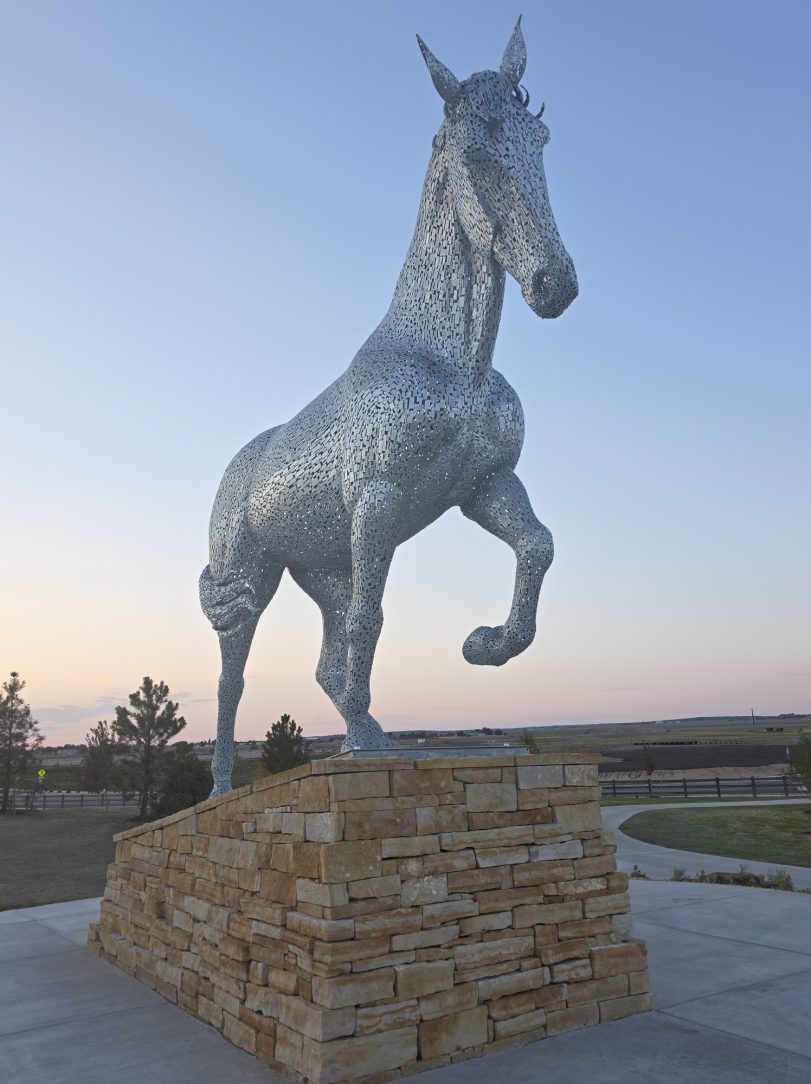
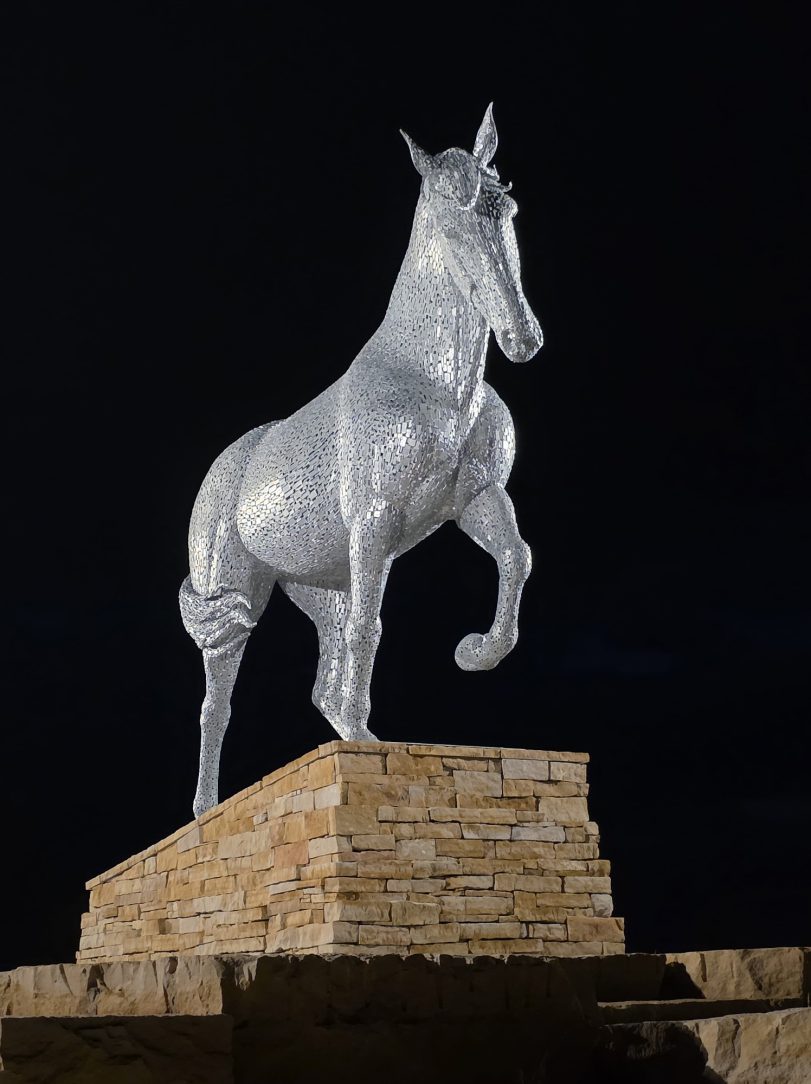
Imagine a draft horse caught mid-stride on the high plains – mane and tail lifted by Front Range wind, defined muscled bust, light skating across a zinc-armored hide. “Belle” is a 5,000‑pound draft-horse sculpture by world-renowned Scottish artist Andy Scott, now anchoring Percheron, a Norwood Development Group community, at East Woodmen Road and Banning Lewis Parkway in Colorado Springs.
A 5,000 pound draft horse forged in steel and sealed in zinc, Belle catches sun, snow, and shadow like a living thing – built to gleam now and endure for decades.
Scott’s portfolio spans major commissions across Europe, Australia, and North America, earning a reputation of nothing short of creative genius in turning industrial materials into lyrical, site-specific icons. Rising 15 feet (21 feet on her stone plinth), “Belle” is both landmark and namesake – a sentinel whose galvanized finish mirrors the region’s working-class spirit. Poised between open plains and the Rocky Mountains, she serves as a point of orientation and gathering place, her geometry catching sun, snow, and shadow – an enduring emblem of strength, resilience and purpose.
“Belle” moved through a disciplined public-art process: context, engineering, fabrication, protection, and placement. The concept tied Percheron heritage to key sightlines, advancing from sketch to structure including pose, anatomy, internal framing, and service access. Scott relies on hand-skill and draftsmanship alone; no computers or digital modeling shape the form.
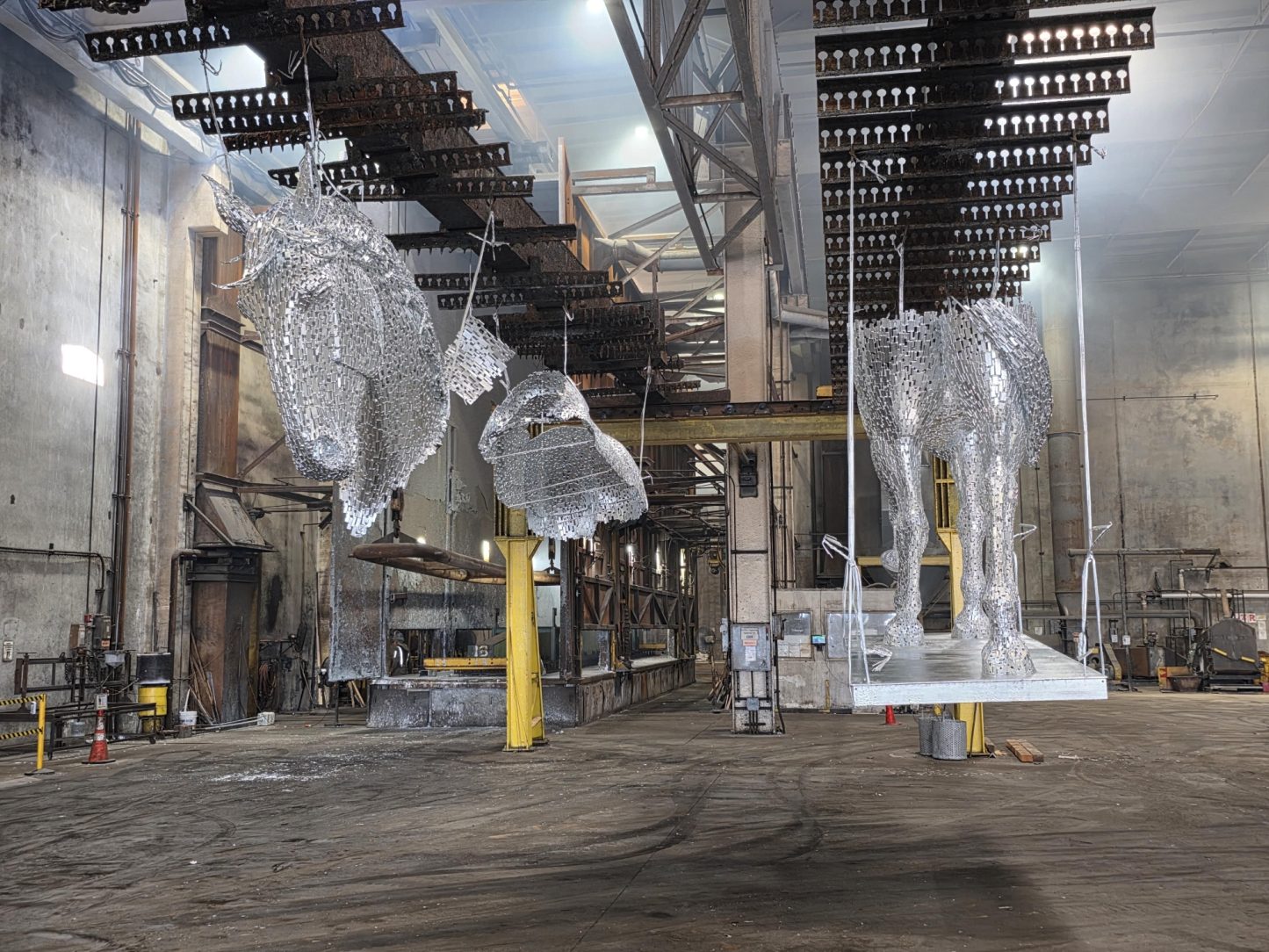
Beneath the skin, concealed reinforcement carries the load while the surface performs. Thousands of small steel flat bars guillotine-cut, faceted, and welded hand-stitched create the illusion of flowing curves. The fine pattern softens glare, suggests the mane’s motion, and guides water to discreet drains; the effect is a three-dimensional pointillist painting in steel.
In the shop, components were formed, fitted, welded in controlled sequences, then trial-assembled to verify alignment; enclosed cavities received vents, drains, and temporary pick-up lugs. For longevity, the sculpture was degreased, pickled, fluxed, and hot-dip galvanized – immersed in molten zinc at ~830°F (450°C) to form alloy-bonded layers – then inspected and cleaned at cutbacks. The resulting coating, only a few thousandths of an inch thick, provides barrier and sacrificial (cathodic) protection that will gradually weather to a soft matte-gray patina that complements the work’s crisp geometry.
Colorado Springs can swing from snow and cold to sunny and mild in a single afternoon; wind-blown grit, de-icing salts, and high UV are everyday realities. Hot-dip galvanizing meets those demands with a metallurgically bonded iron–zinc shell – measurable, maintainable, and built for decades – gleaming now and designed to endure as the patina matures.
Details
Award Class
Newly Complete
Award Sectors
Excellence Award Winners
Artistic
Environment
Suburban
Location
Colorado Springs, CO United States
Reasons for Galvanizing
Aesthetics, Coating Durability, Corrosion Performance, Life-Cycle Cost, Prior HDG Experience, Quality of HDG, Sustainability
Components Galvanized
Fabricated Horse Sculpture made of thousands of small steel flat bars, guillotine-cut and faceted to create the impression of curves, were welded hand-stitched across the surface
Tonnage/Size
Steel: 3
HDG: 3
Team Members
Other
Andy Scott
Sculptor Andy Scott, LLC
Member Galvanizer(s)
Valmont Coatings - Calwest Galvanizing
Thank you! Your vote has been accepted.