
Menu • Quick Links • Search
Login
CloseSand Island Wastewater Treatment Plant
Honolulu, HI United States | 2025
 2026
2026
On Sand Island in metropolitan Honolulu, Hawaii’s largest wastewater treatment plant has anchored the state’s sanitation infrastructure since 1978. Originally designed for 82 million gallons per day (MGD) of primary treatment, the facility now serves a broad corridor – from Kuliouou Valley in East Honolulu to Aliamanu in the west.
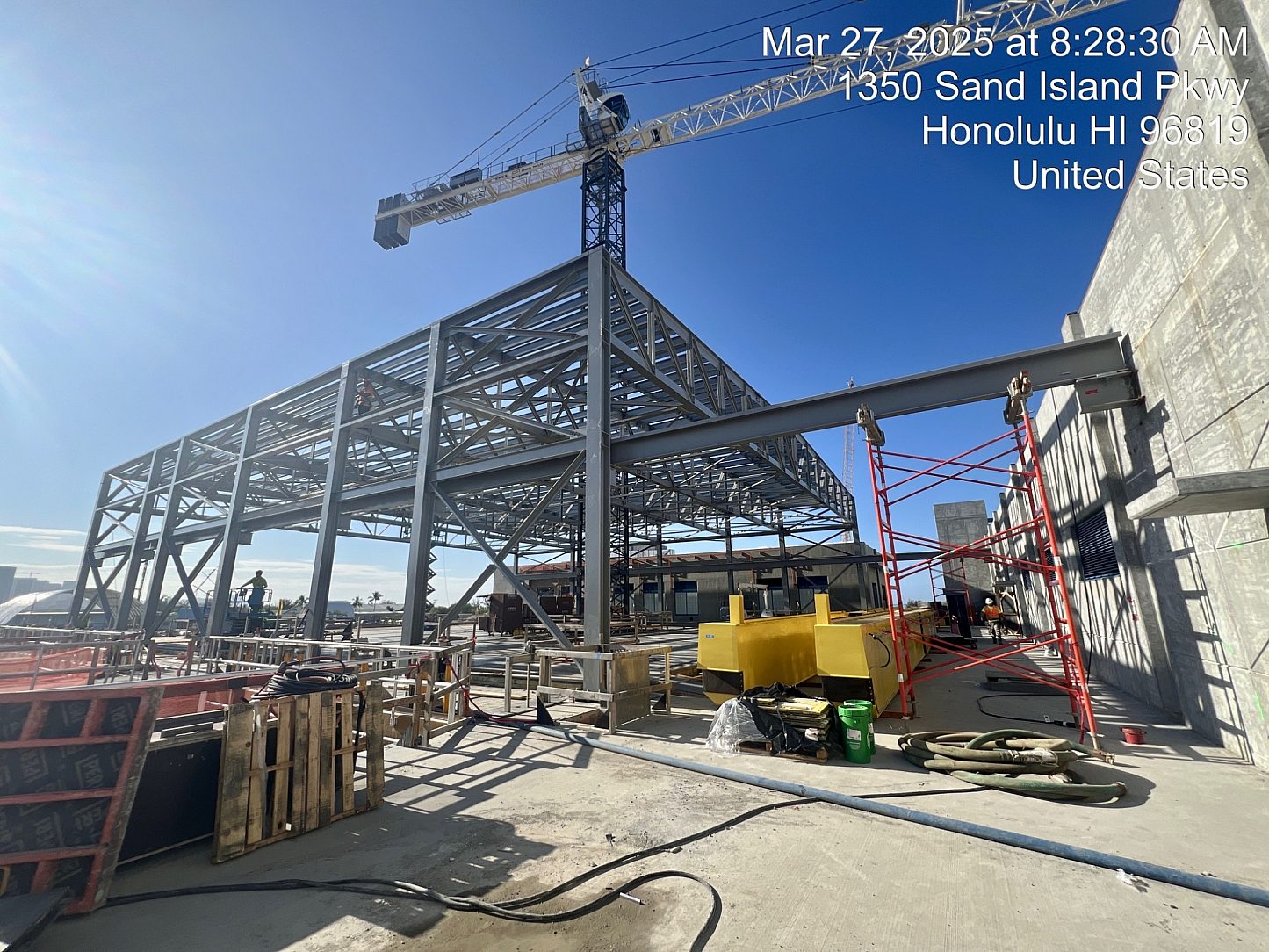
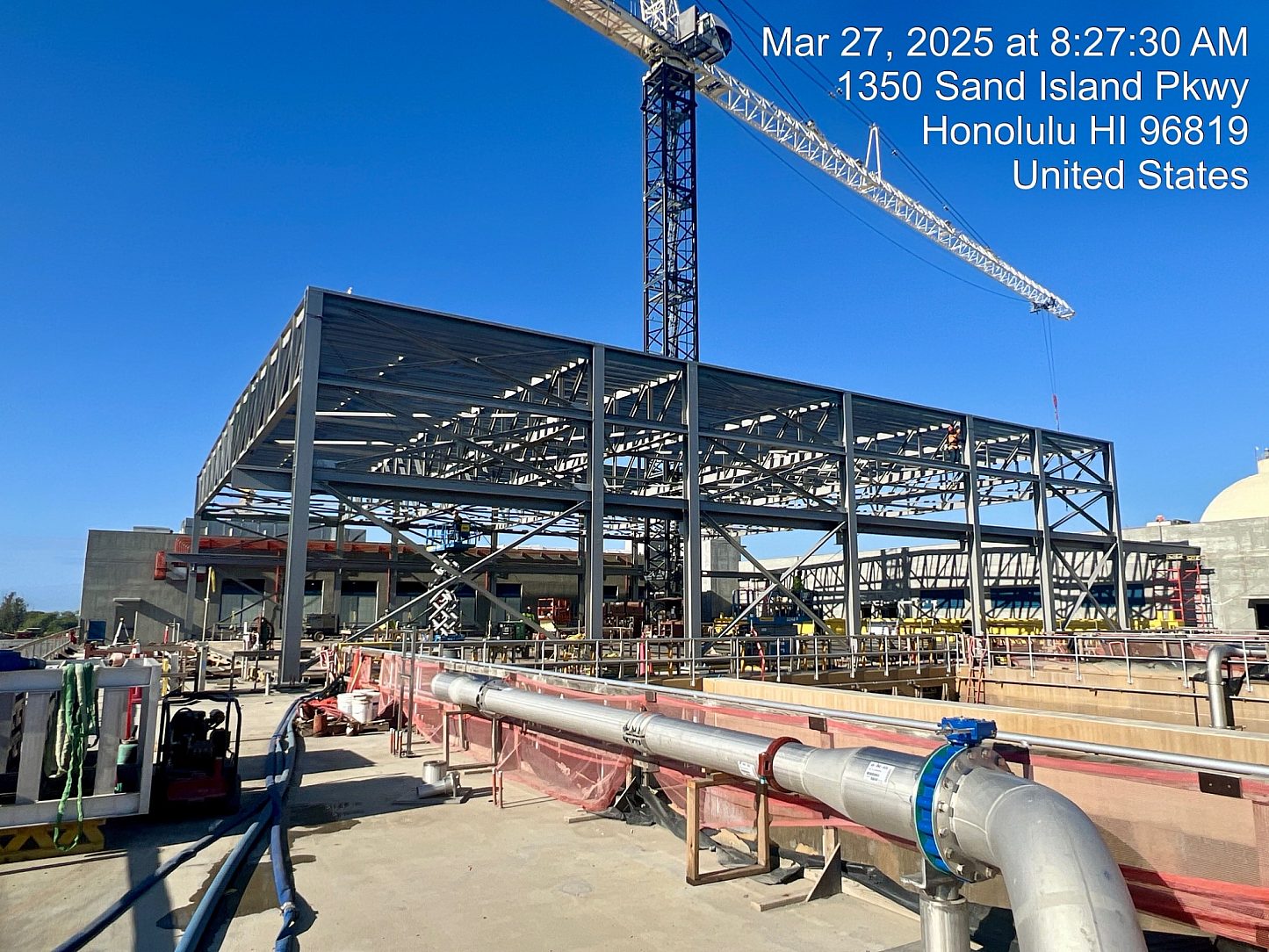
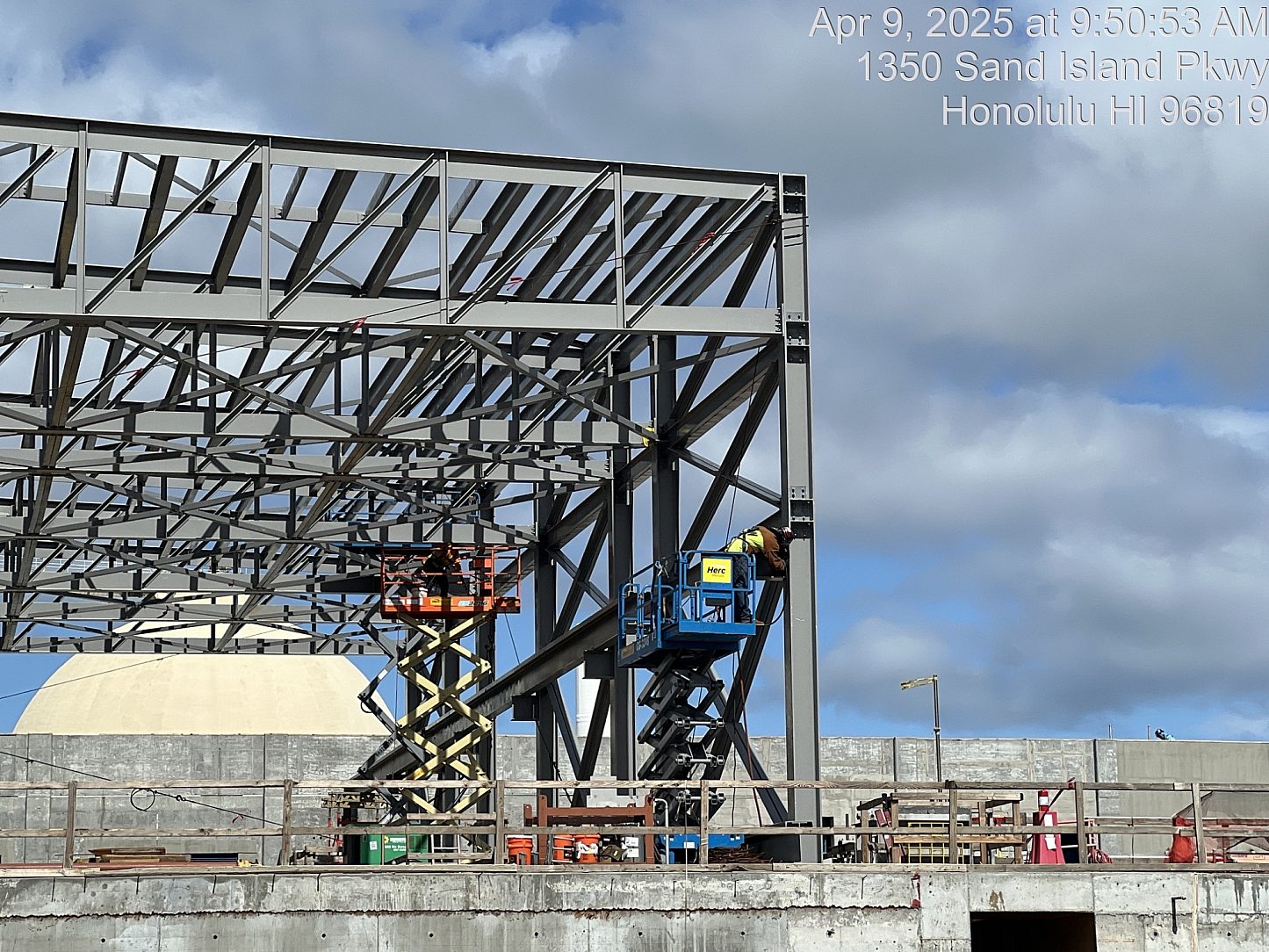
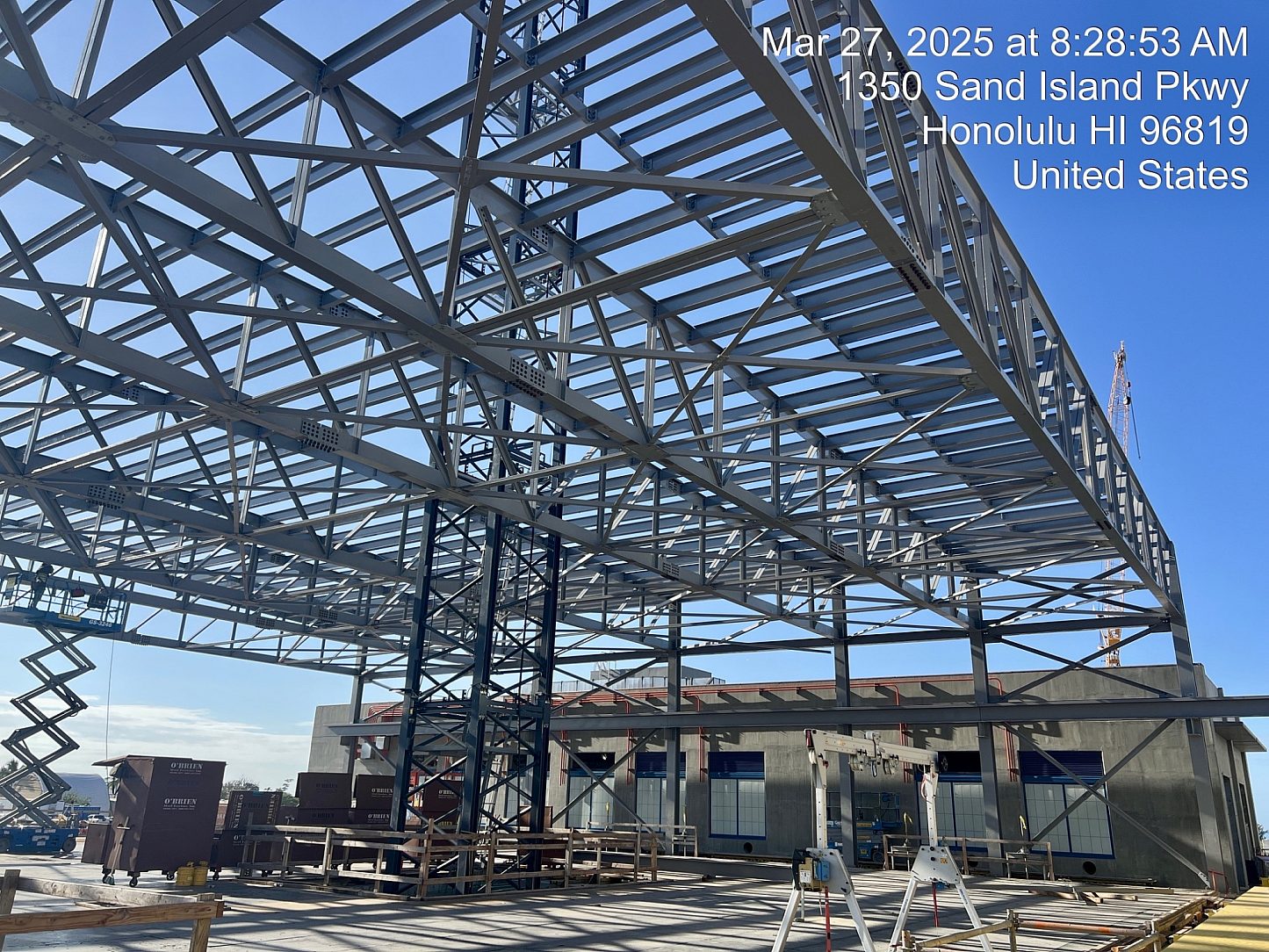
Despite complex design which made inaccessible gaps, the team used an innovative solution of hot-dip galvanizing and paint to provide durability in the harsh environment.
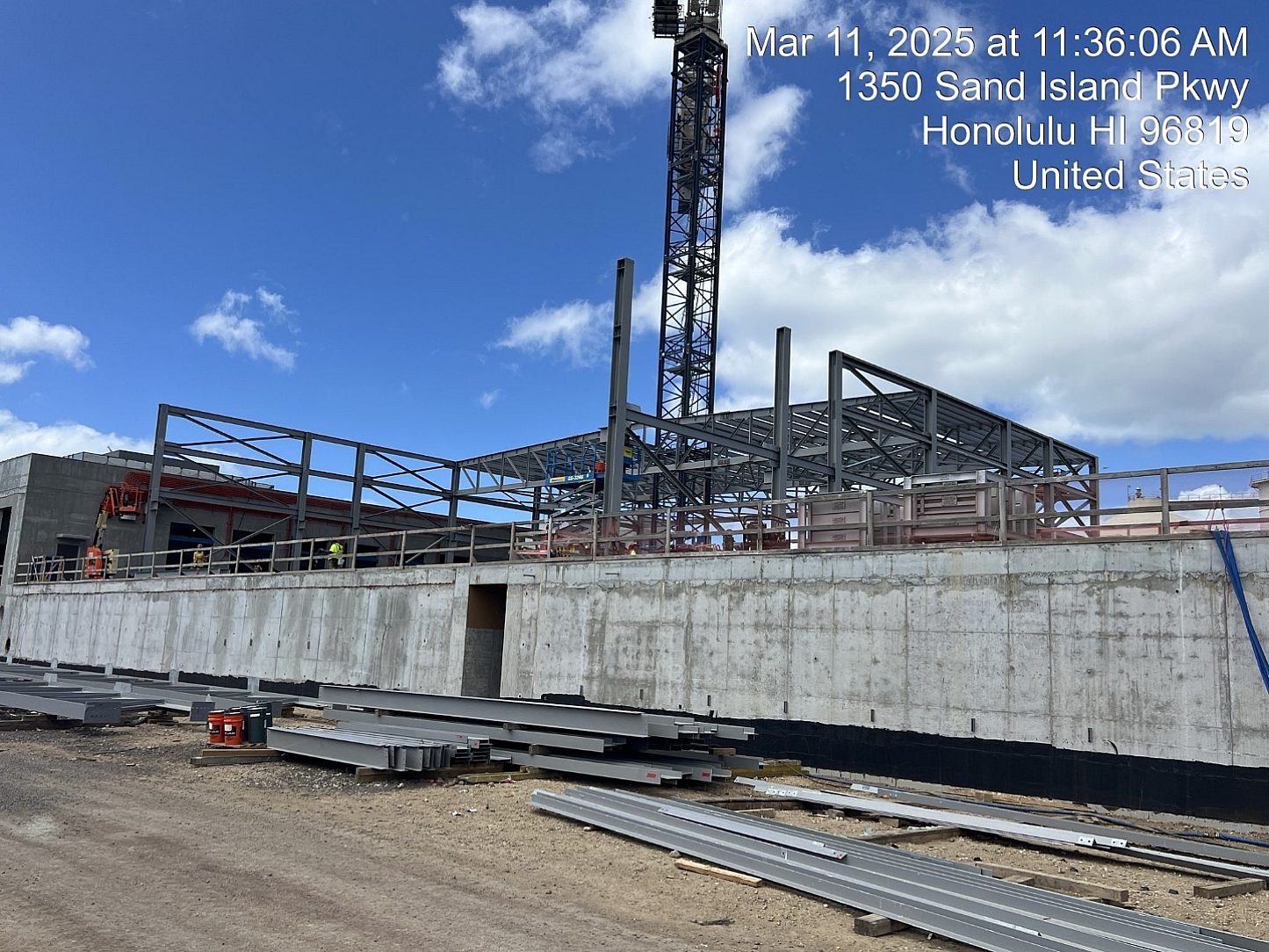
To meet the demands of the next generation, the facility began a transformation using structural steel and miscellaneous metals. The project’s most significant challenge was fabricating and coating the truss web members for the Membrane Bioreactor (MBR) Canopy. Back-to-back angles created a narrow interior gap – an enclosed space unreachable by conventional blast cleaning and paint application. Rather than accept a weak point, the team engaged design engineers early and developed a coating strategy that would wrap every surface. The solution: hot-dip galvanizing, followed by primer and topcoat, delivering long-term corrosion protection despite the configuration’s inherent inaccessibility.
Renderings of the upgraded Sand Island facility reflect the scale of work underway as part of a consent decree to elevate treatment performance and meet expanding environmental and operational requirements. The project converts the existing primary plant into what will become the state’s largest secondary treatment facility. As construction advanced in early 2024, new assets – including anaerobic digesters, sludge storage tanks, and a digester control building – took shape. When complete, the system will produce Class A biosolids from both primary and secondary sludges, suitable for agricultural and landscaping use.
Upgrades now in progress increase rated capacity from 82 MGD to 90 MGD and strengthen chemically enhanced primary treatment to optimize performance ahead of new secondary systems. The plant currently treats an average flow of 65 MGD, a maximum monthly flow of 90 MGD, and peak wet-weather flows up to 240 MGD. Treatment includes chemically enhanced primary clarification and UV disinfection prior to ocean discharge.
Modernization is unfolding in phases. Phase 1 delivers a 20 MGD Membrane Bioreactor (MBR) system, establishing the foundation for full secondary treatment. Phase 2 adds a dual secondary process combining Aerobic Granular Sludge (AGS) and MBR, alongside peak-flow equalization, preliminary and primary-treatment enhancements, and expanded solids-handling capacity to support the new biology. The facility’s Organic Waste Sustainability Plan advances long-term goals by incorporating fats, oils, grease, and food waste to boost anaerobic digestion, cut greenhouse gas emissions, and generate renewable energy through cogeneration.
Delivering this work demanded tight coordination across steel fabrication, coating, marine shipping logistics, and multi-phase construction all while maintaining continuous operation. In a coastal environment defined by high humidity and salt air, advanced protection is essential. The selected multilayer system – hot-dip galvanizing followed by primer and topcoat – was chosen to withstand accelerated corrosion and to ensure complete coverage, including surfaces that could never be conventionally prepared. The payoff is durability with long-term cost effectiveness: fewer maintenance interventions and extended service life for critical structural components.
Overall, the Sand Island WWTP modernization is a major investment in Hawaii’s critical wastewater infrastructure. The fabricator’s contributions – innovative coating solutions, early engineering coordination, and nearly half a million pounds of structural steel – helped secure the facility’s durability, performance, and readiness for the next generation of wastewater treatment.

Details
Award Class
Newly Complete
Award Sectors
Excellence Award Winners
Industrial
Environment
Tropical Marine
Location
Honolulu, HI United States
Reasons for Galvanizing
Coating Durability, Corrosion Performance, Ease of Specifying, Life-Cycle Cost, Prior HDG Experience, Quality of HDG, Sustainability
Components Galvanized
Beam
Trusses
Channel
Angle
Tonnage/Size
Steel: 220
HDG: 220
Team Members
Fabricator
Attila Szombathy
Cody Builders
Member Galvanizer(s)
Zinkpower USA - Waco
Thank you! Your vote has been accepted.