Menu • Quick Links • Search
Login
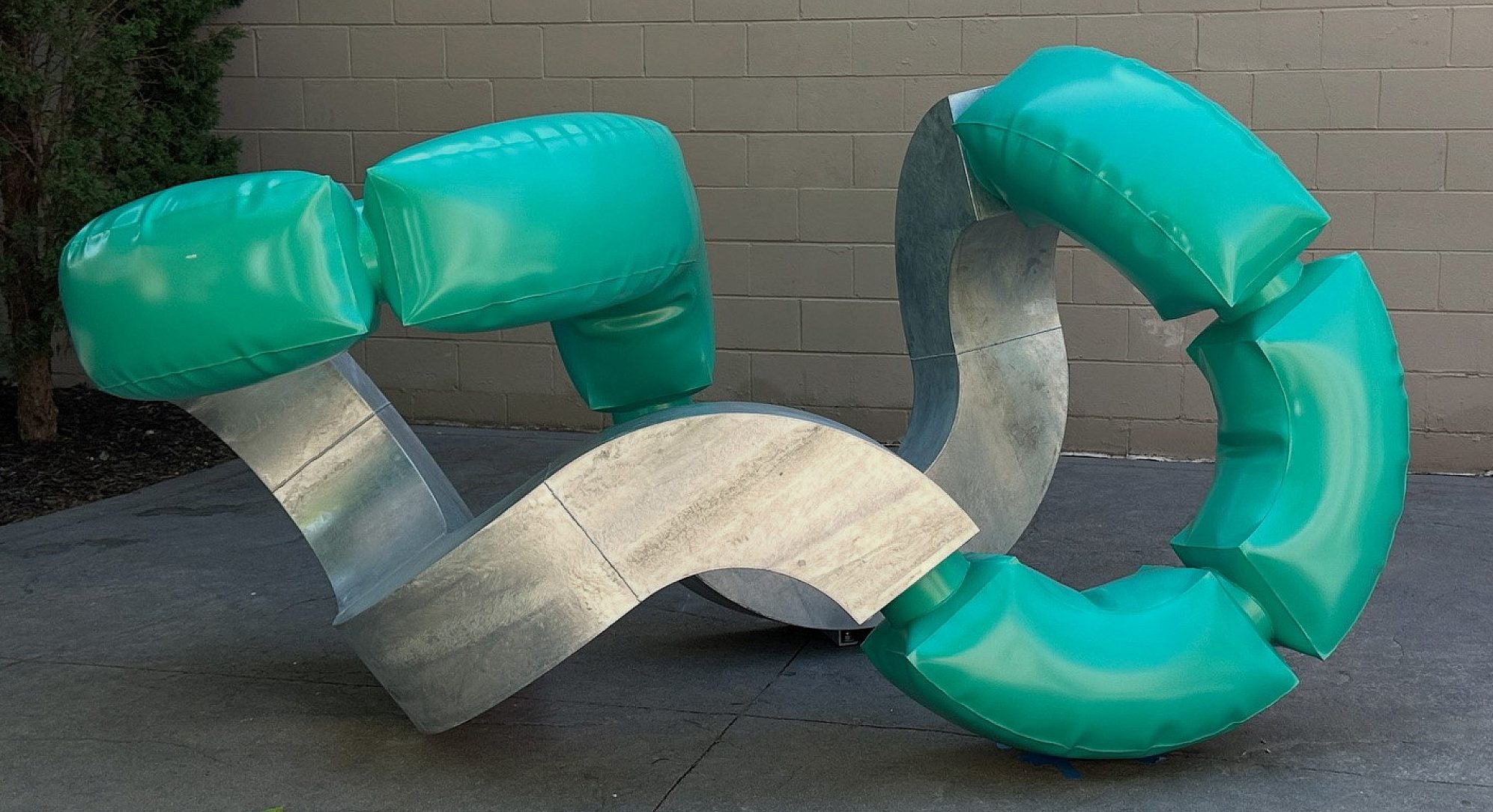
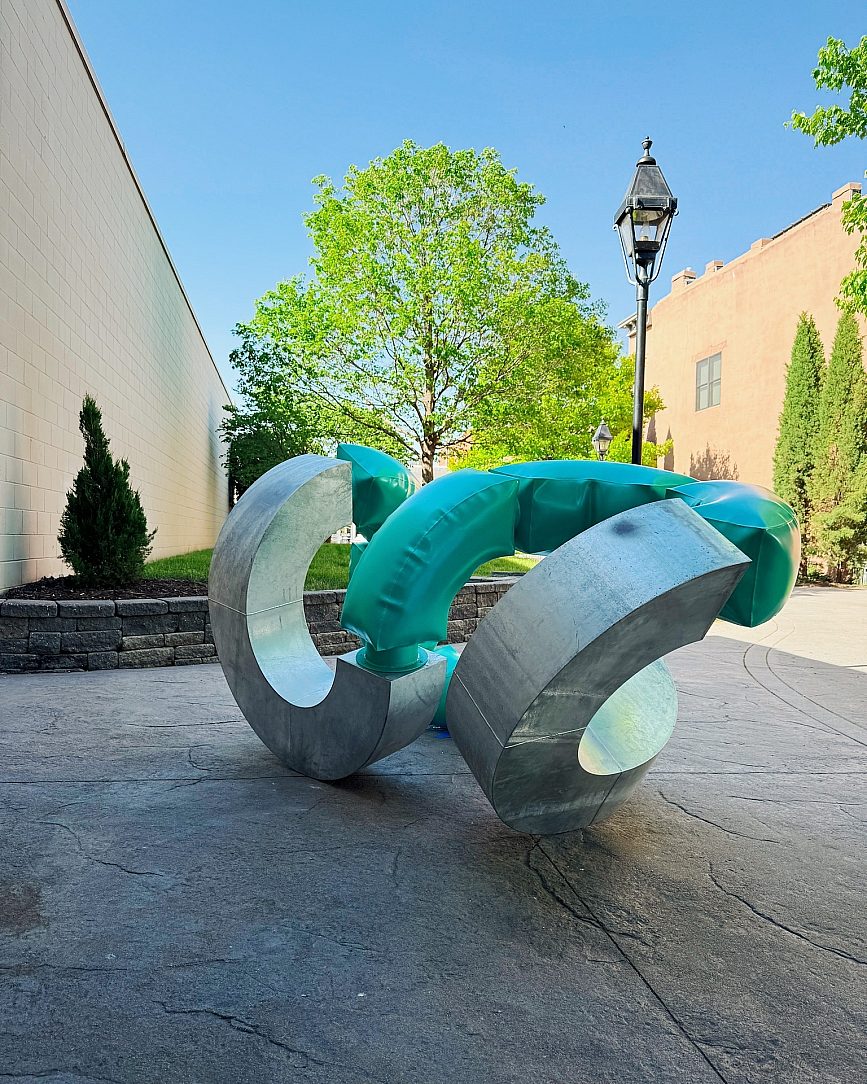
CloseWinder II is a sculptural achievement made possible through a rare and technically demanding process: inflated steel formed at temperatures nearing 1,300 degrees Fahrenheit and expanded with precisely controlled compressed air. This unconventional fabrication method produces complex contours, irregular thicknesses, and interior cavities that challenge traditional engineering expectations and require exceptional attention to structural reliability, venting, draining, and long-term surface protection. These demands made hot-dip galvanizing an essential part of the project from the outset.
"I’m a huge proponent that any work that an artist makes or designs should be integral to its location. I think that it’s really important that the work feels like it’s meant to be there. Both coating finishes helped me get this right for the town of Hastings.” - Aaron Badham, Artist
The sculpture represents the intersection of artistic innovation, community identity, and the unmatched durability of hot-dip galvanizing. Installed in downtown Hastings, Nebraska, it occupies a revitalized public space on a lot once home to a cigar factory. The transformation of the site parallels the transformative power of galvanizing itself – elevating steel into a long-lasting landmark that both honors local heritage and enriches the city’s creative district.
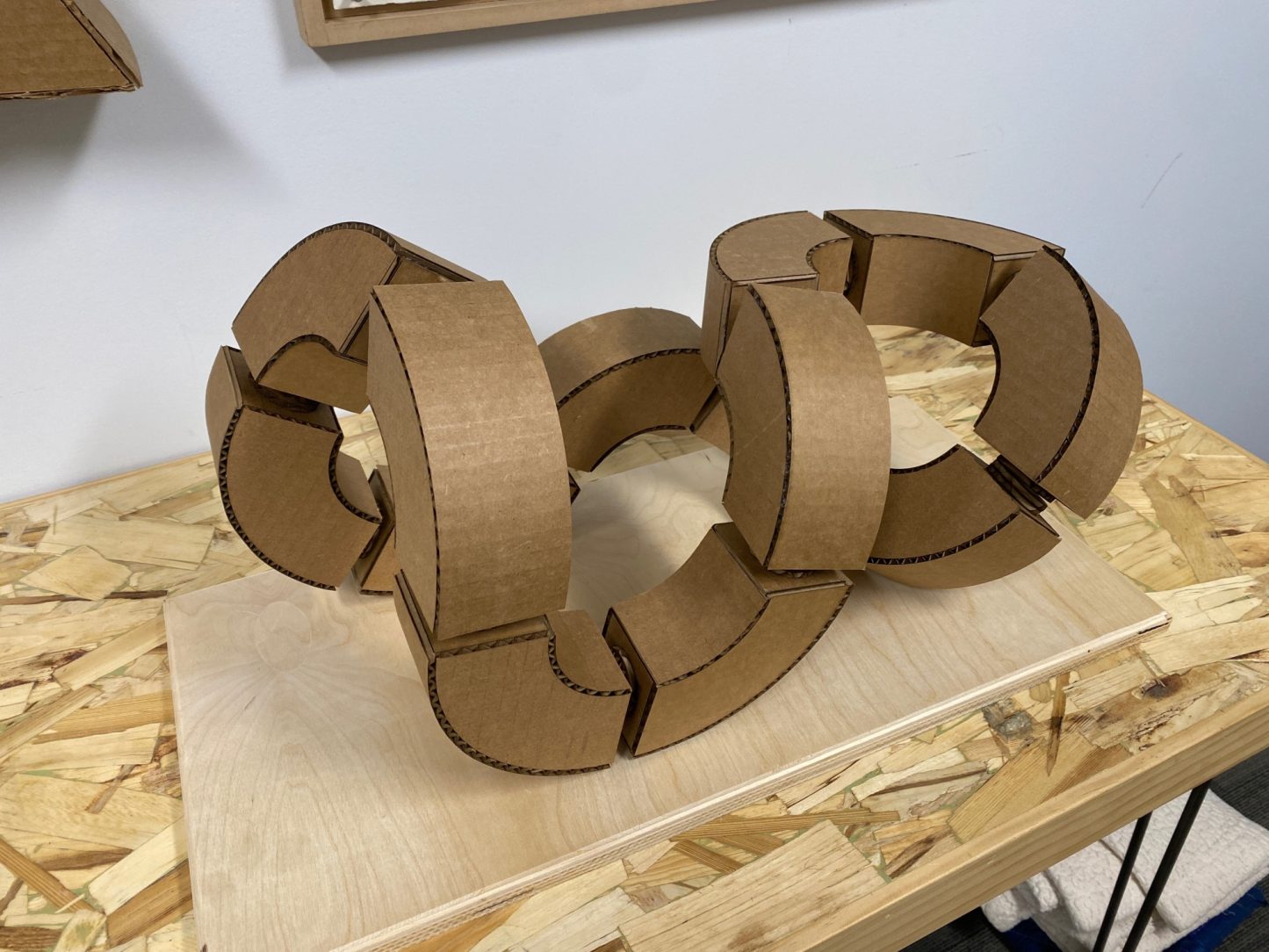
The project began when the Downtown Redevelopment & Revitalization Committee, working with the newly formed Heartbeat Creative District, sought proposals for public artworks that would amplify the cultural experience of Hastings. Artist Aaron Badham submitted a sculptural concept inspired by the region’s deep connections to agriculture, manufacturing, and irrigation. His design quickly stood out, earning him the commission in late 2022. Badham then spent more than a year and a half fabricating the piece in Tulsa before its installation in May 2025.
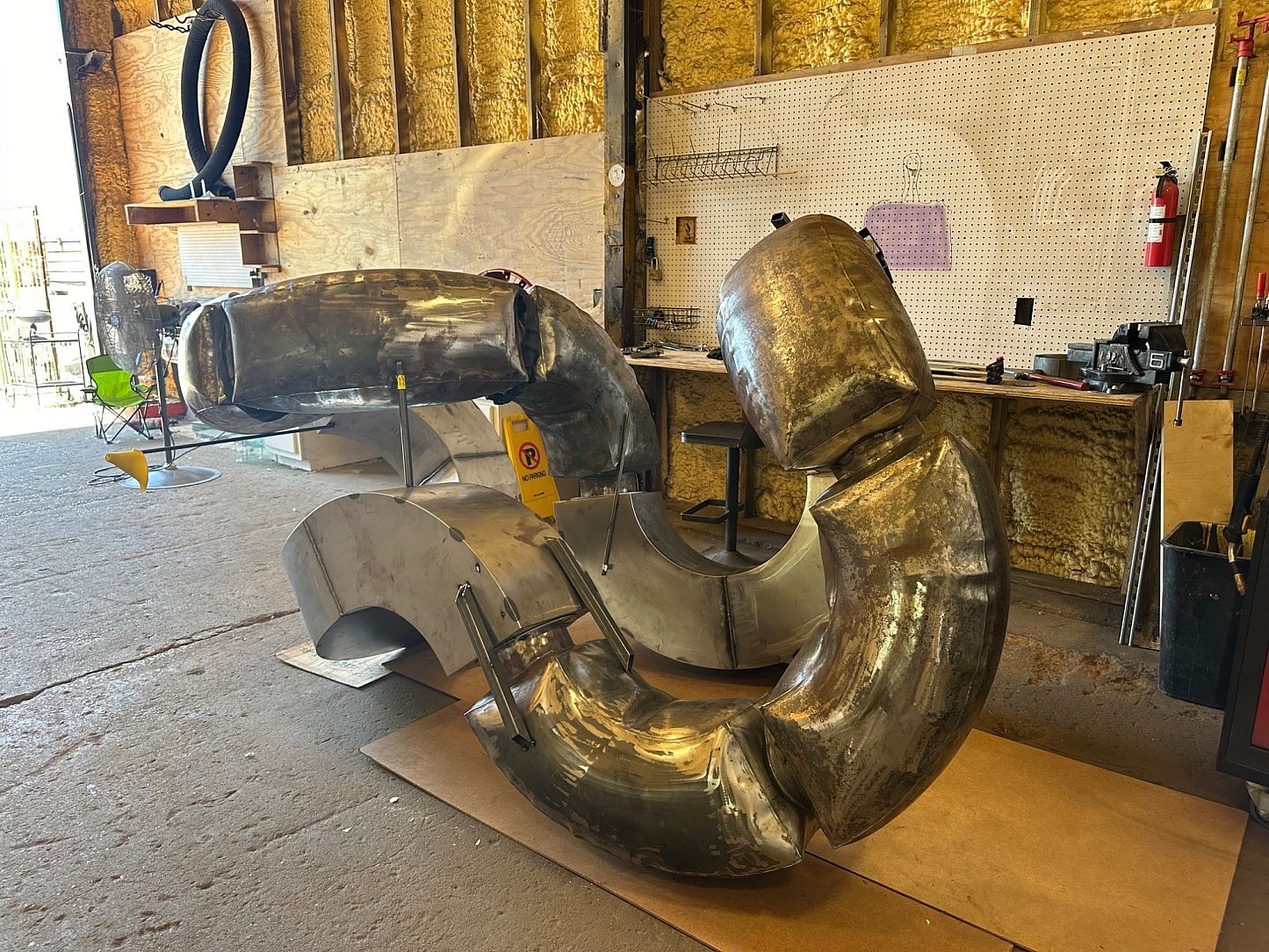
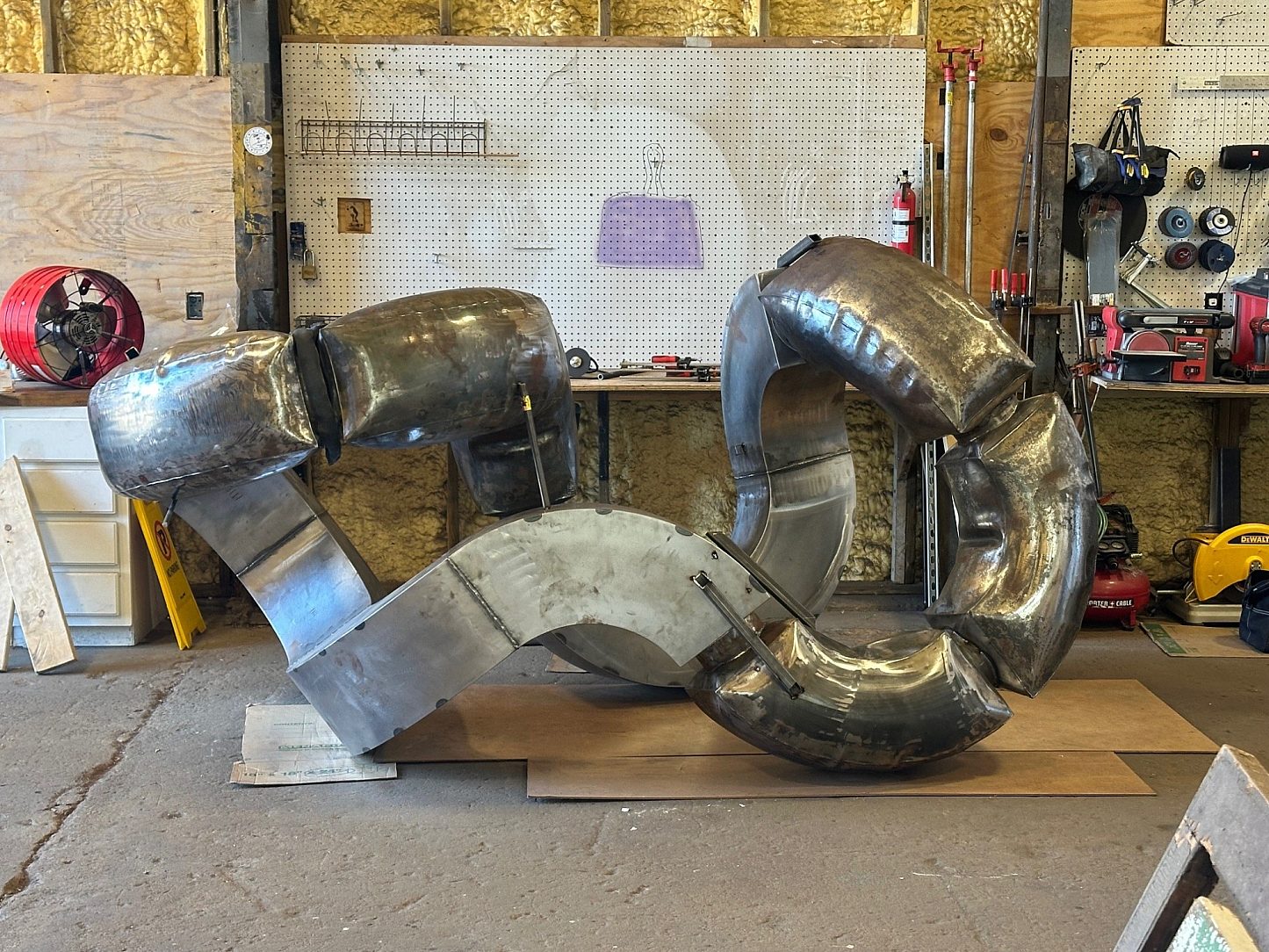
The sculpture’s signature inflated steel forms were created using Badham’s proprietary process, in which hollow steel components are heated in a ceramic kiln or glass annealer to approximately 1,300 degrees Fahrenheit – glowing orange and pliable – before being carefully expanded with compressed air. This technique produces geometry unlike any traditionally fabricated steel structure. The process challenges tolerance, introduces unpredictable change, and requires precision in fitting the inflated shapes together. Each form presents a new engineering puzzle, making structural reliability and surface protection essential.
Hot-dip galvanizing became an integral part of achieving those goals. Hastings has a long history with galvanized steel – center pivot irrigation, invented locally, has always depended on HDG – and the community specifically favored galvanizing in this commission. The artist also had prior positive experience with galvanized public sculptures, reinforcing the value of a coating capable of withstanding outdoor exposure for generations.
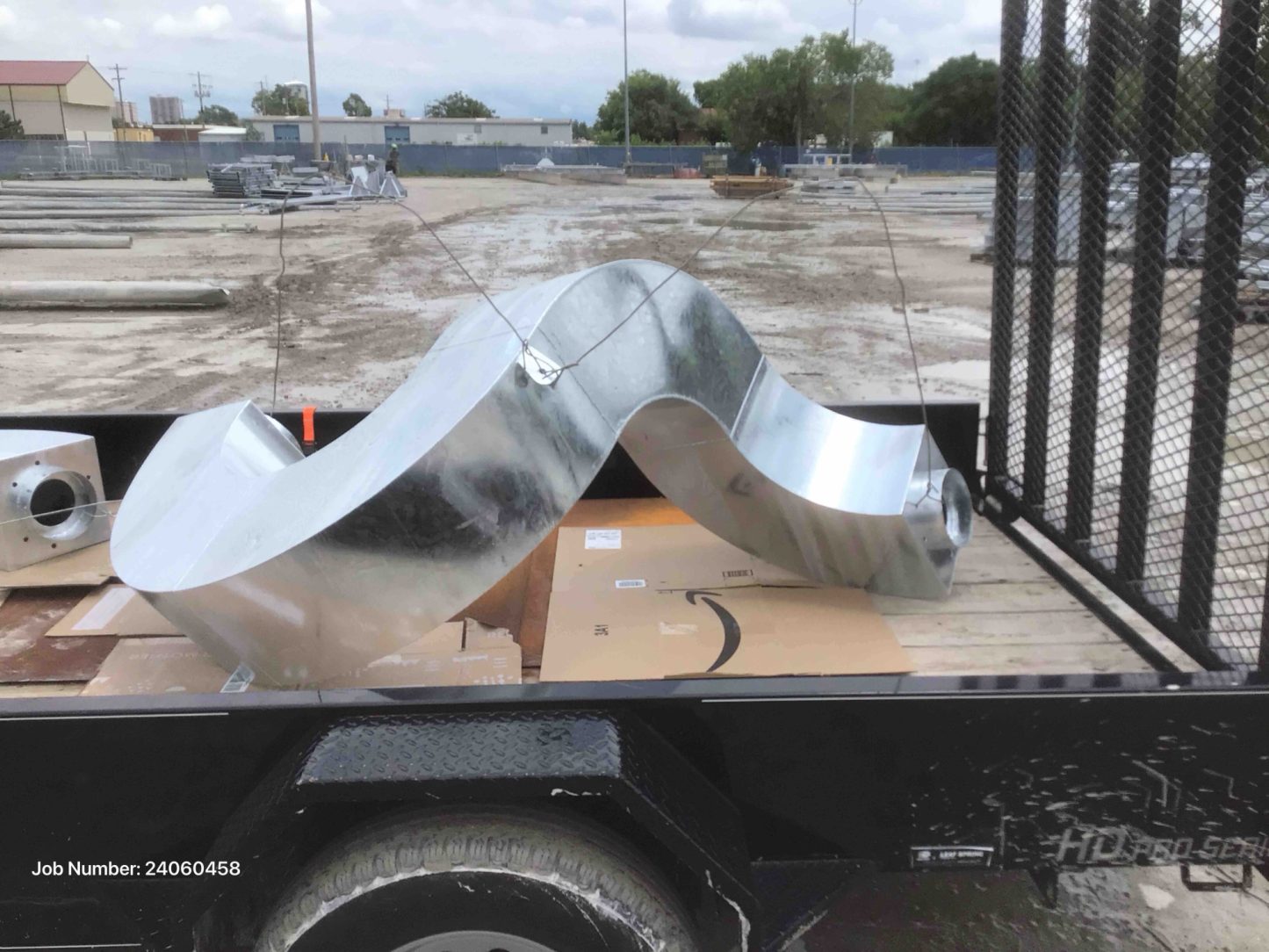
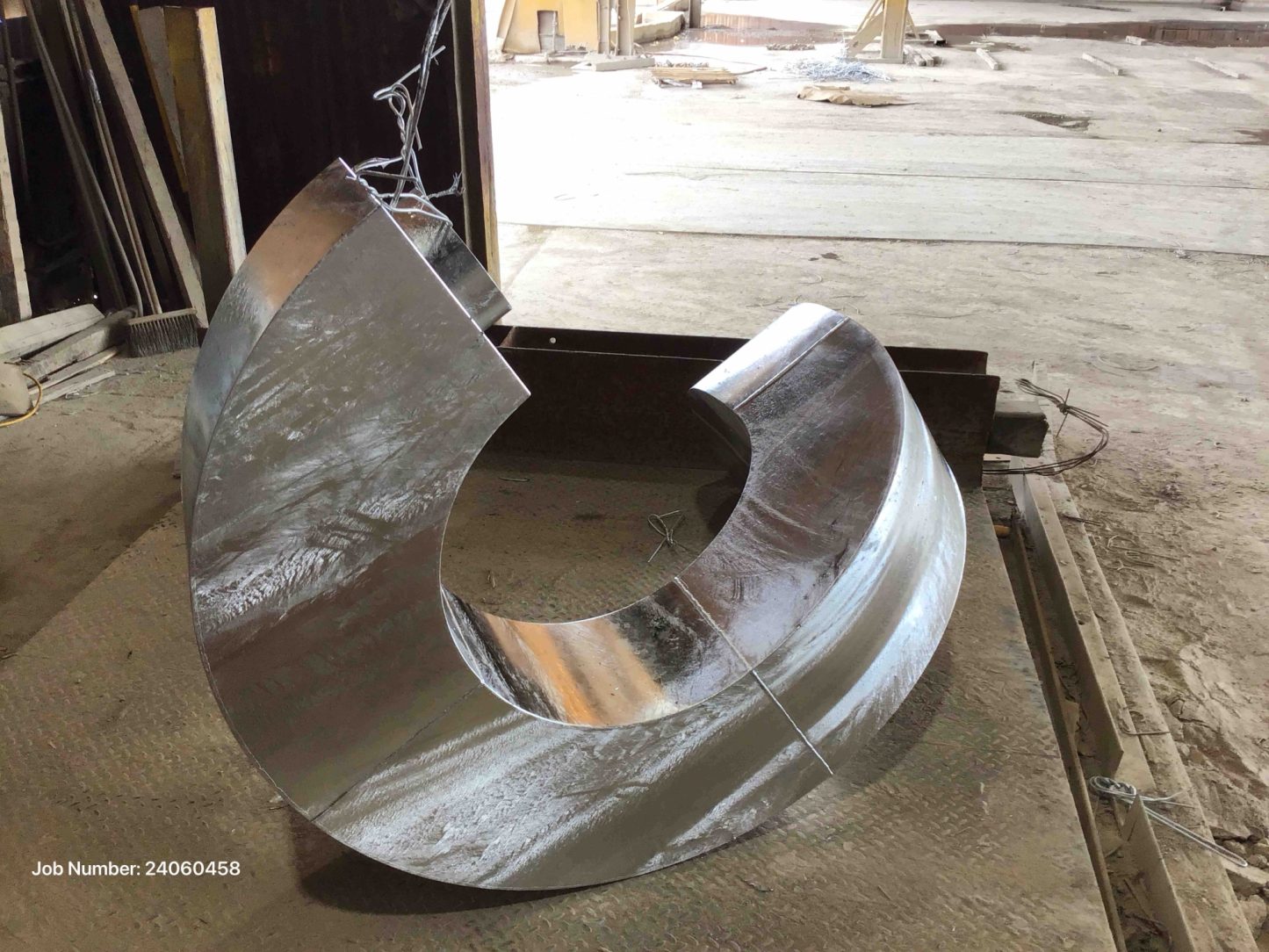
The unconventional geometry of the inflated steel introduced unique galvanizing challenges. Powder coating was initially considered, but the forms did not accept it well. Ultimately, the sculpture required extensive surface preparation, including blasting and manual finishing work completed in Lincoln, Nebraska. During the HDG process, the piece was galvanized multiple times to achieve the precise finish desired by both the artist and city. Through these iterations, Badham gained a new understanding of how zinc flows over the complex surfaces and how certain inflated shapes respond in the kettle. The galvanizer worked closely with the artist to ensure full coverage, interior protection, and uniform appearance across all structural elements.
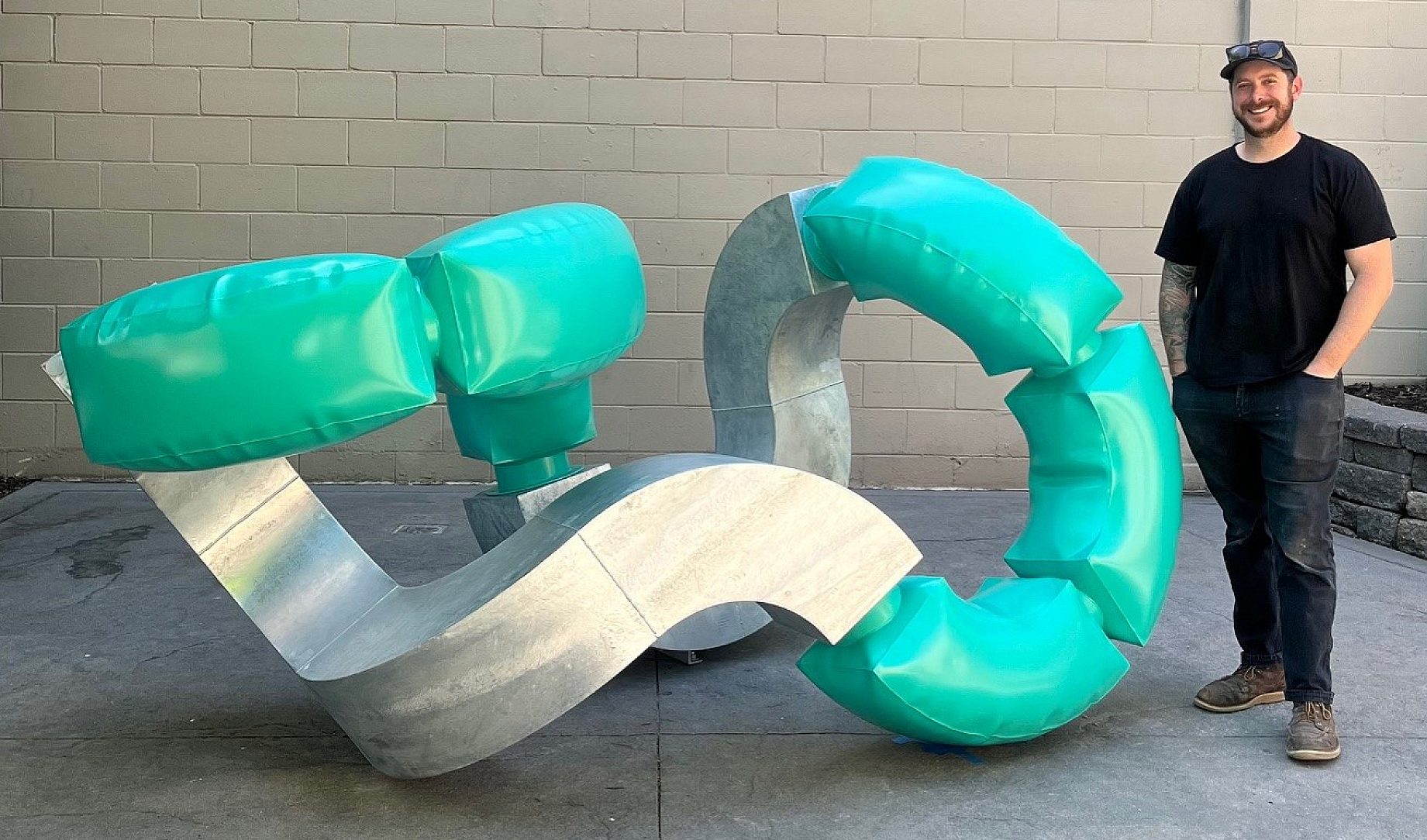
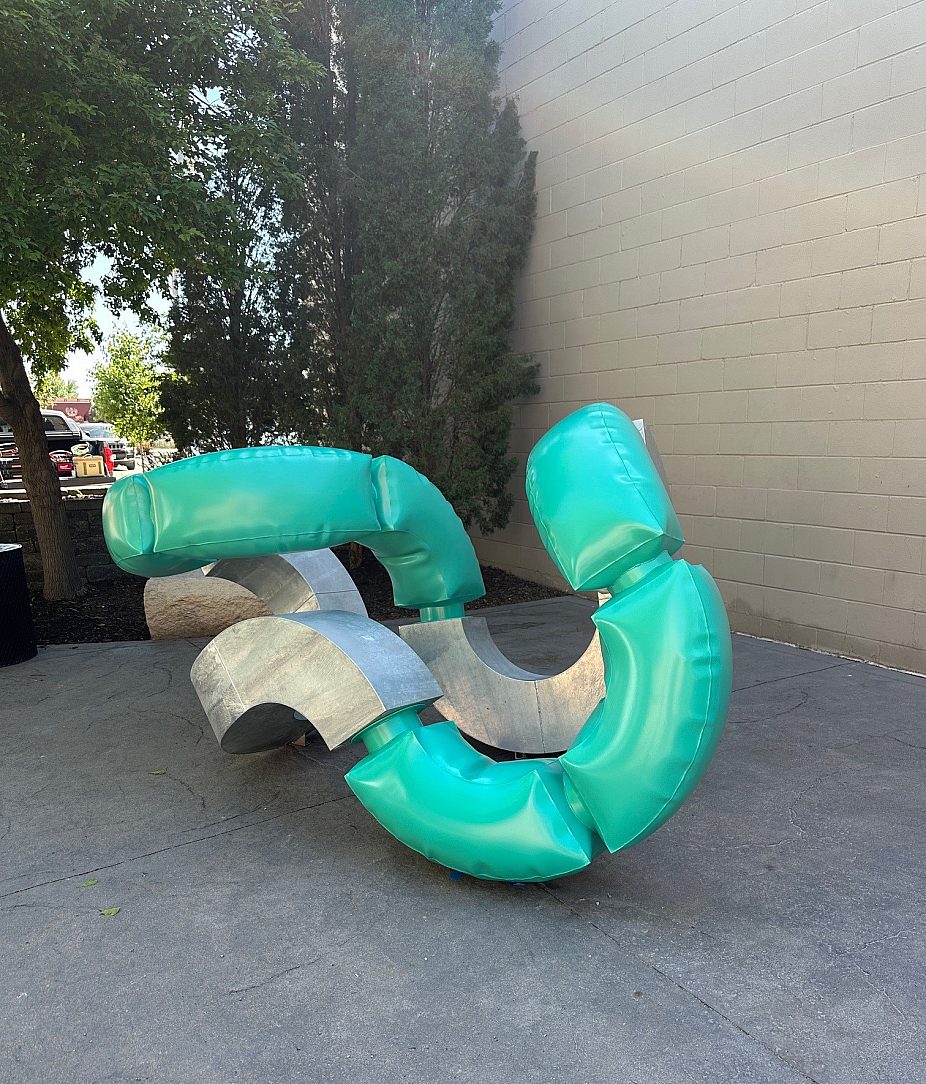
The final sculpture was painted in a distinctive teal that ties back to local manufacturing – specifically the iconic teal-green PVC pipe seen throughout the region – and echoes the movement of water central to pivot irrigation systems. The zinc finish also contributed to the sculpture’s visual composition, adding a bright, reflective base that countered the bold teal and emphasized the dimensionality of the inflated forms. With a footprint of roughly 5 feet by 5 feet and a length of 10.5 feet, Winder II is anchored with concealed hardware, creating the illusion that it floats lightly along the ground plane. Despite its delicate visual balance, the piece stands securely, its galvanized substrate guaranteeing long-term corrosion resistance and structural integrity.
Since installation, Winder II has become a defining feature of downtown Hastings and a model for how galvanizing enables ambitious public art. It has been recognized during the city’s Summer Sound festivities and embraced by the community as a symbol of innovation, creativity, and local pride. The project exemplifies successful collaboration between artist, galvanizer, and civic partners – each contributing expertise to create a work built to endure decades of public interaction and environmental exposure.
Winder II stands today not only as a sculptural centerpiece but also as a testament to what hot-dip galvanizing makes possible. Its longevity, resilience, and visual impact directly reflect the protective power of zinc, ensuring this artwork will continue to serve the people of Hastings for generations to come.
Details
Award Class
Newly Complete
Award Sectors
Artistic
Environment
Suburban
Location
Hastings, NE United States
Reasons for Galvanizing
Aesthetics, Coating Durability, Corrosion Performance, Quality of HDG, Sustainability, Turnaround Time
Components Galvanized
Rolled Tube Weldments
Tonnage/Size
Steel: 1
HDG: 1
Team Members
Fabricator
Aaron
Badham
Member Galvanizer(s)
AZZ Galvanizing - Tulsa
Thank you! Your vote has been accepted.